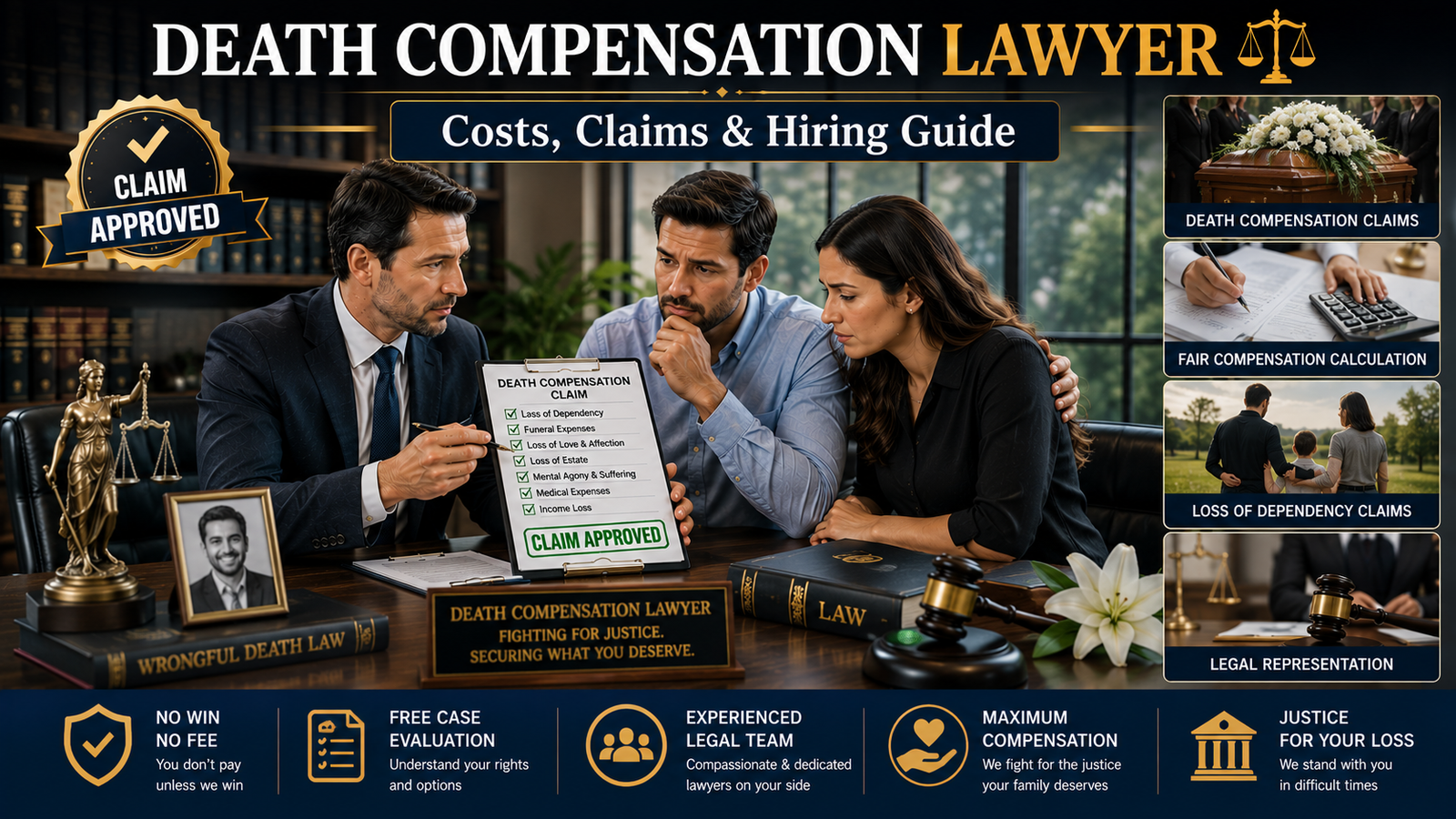
A death compensation lawyer helps families pursue financial compensation after a loved one dies due to another party’s negligence, wrongful conduct, or accident. These attorneys investigate the circumstances of the death, gather evidence, negotiate with insurance companies, and represent families during settlement negotiations or court proceedings.
Death Compensation Lawyer: Costs, Claims & Hiring Guide
Losing a loved one unexpectedly is one of life’s most difficult experiences. In addition to emotional grief, families may face financial challenges such as funeral expenses, medical bills, lost household income, and ongoing financial uncertainty.
Many families search for a death compensation lawyer because they believe another person, company, healthcare provider, or organization may have contributed to the death and want to understand their legal rights, potential compensation, attorney costs, and the claims process.
This guide explains what a death compensation lawyer does, when families may consider legal action, common types of fatal accident claims, legal costs, and the process involved in pursuing compensation.
What Is a Death Compensation Lawyer?
A death compensation lawyer, often referred to as a wrongful death attorney, represents surviving family members seeking compensation after a person’s death allegedly resulted from negligence, recklessness, misconduct, or another wrongful act.
These lawyers investigate the circumstances surrounding the death, identify potentially responsible parties, negotiate with insurance companies, and pursue compensation through settlement discussions or litigation when necessary.
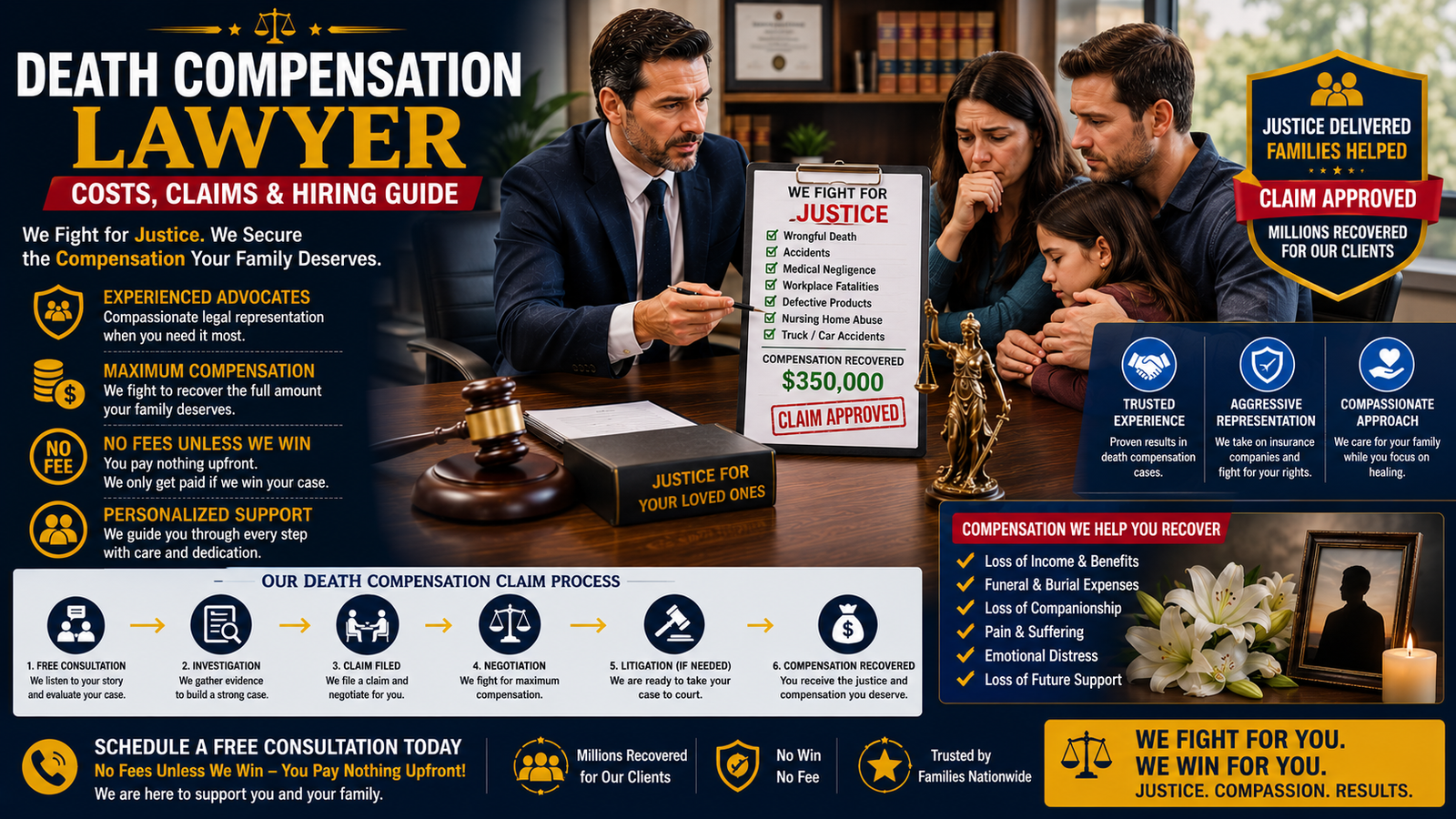
When Should You Contact a Death Compensation Lawyer?
Families often seek legal advice when they believe a preventable incident contributed to the death of a loved one.
- The death resulted from a motor vehicle accident.
- A workplace accident caused the fatal injuries.
- Medical treatment may have involved negligence.
- The death occurred because of unsafe property conditions.
- A defective product allegedly contributed to the fatal incident.
- The incident involved commercial vehicles or aviation accidents.
- Liability for the death is disputed.
- Insurance companies deny or undervalue claims.
Common Types of Death Compensation Claims
| Claim Type | Examples |
|---|---|
| Motor Vehicle Accidents | Fatal car, truck, or motorcycle accidents |
| Medical Malpractice | Deaths allegedly caused by medical negligence |
| Workplace Accidents | Fatal construction or industrial incidents |
| Premises Liability | Fatal slip and fall or unsafe property accidents |
| Product Liability | Defective products causing fatal injuries |
| Aviation Accidents | Commercial or private aircraft fatalities |
Who May Be Eligible to File a Death Compensation Claim?
Eligibility rules vary by jurisdiction. In many jurisdictions, the following individuals may have legal standing to bring a claim:
- Spouses or legal partners.
- Children of the deceased.
- Parents of the deceased.
- Estate representatives or executors.
- Other qualifying dependents under applicable law.
Because eligibility requirements differ significantly, families often consult an attorney to determine who may legally file a claim.
What Does a Death Compensation Lawyer Do?
- Investigate the circumstances surrounding the death.
- Collect medical, financial, and accident-related evidence.
- Identify responsible individuals or organizations.
- Consult expert witnesses when necessary.
- Calculate potential damages and losses.
- Negotiate with insurance companies.
- File legal claims or lawsuits.
- Represent families during settlement negotiations and trial proceedings.
Requirements Often Needed for a Death Compensation Claim
Legal requirements vary, but claimants typically must establish several legal elements.
| Requirement | Description |
|---|---|
| Duty of Care | The responsible party owed a legal duty to the deceased. |
| Breach of Duty | The responsible party failed to meet that duty. |
| Causation | The conduct caused or contributed to the death. |
| Damages | Surviving family members suffered legally recognized losses. |
Important Evidence in Death Compensation Cases
- Death certificates.
- Medical records and treatment history.
- Autopsy or coroner reports when available.
- Police or accident reports.
- Photographs and videos.
- Witness statements.
- Employment and income records.
- Insurance documentation.
- Expert witness opinions.
How Much Does a Death Compensation Lawyer Cost?
Many wrongful death attorneys work on a contingency fee basis. Under this arrangement, attorney fees are generally paid only if compensation is recovered.
| Fee Structure | Description |
|---|---|
| Free Consultation | Initial case evaluation at no upfront cost |
| Contingency Fee | Attorney receives a percentage of recovered compensation |
| Hourly Billing | Less common in wrongful death matters |
| Case Expenses | Court costs, expert fees, and investigation expenses |
Families should review fee agreements carefully and ask how litigation expenses are handled.
Death Compensation Claim Process
Step 1: Obtain Important Records
Families should gather available records related to the incident and medical treatment.
Step 2: Consult a Lawyer
An attorney can evaluate whether legal claims may exist.
Step 3: Investigation
The lawyer investigates the incident, gathers evidence, and identifies potentially liable parties.
Step 4: Damage Assessment
Economic and non-economic losses are evaluated.
Step 5: Insurance Claims and Negotiations
Claims may be presented to insurers or responsible parties.
Step 6: Filing a Lawsuit if Necessary
If negotiations do not resolve the matter, litigation may be initiated.
Step 7: Resolution
The claim may conclude through settlement, mediation, arbitration, or trial.
What Compensation May Be Available?
Compensation depends on the facts, applicable law, and family circumstances.
| Potential Damages | Examples |
|---|---|
| Medical Expenses | Medical treatment provided before death |
| Funeral and Burial Costs | Reasonable funeral-related expenses |
| Lost Financial Support | Income and benefits previously provided by the deceased |
| Loss of Services | Household support and assistance |
| Loss of Companionship | Companionship, guidance, and emotional support |
| Estate-Related Damages | Certain losses recoverable by the estate |
No attorney can ethically guarantee compensation amounts, settlement values, or lawsuit outcomes.
Factors That May Affect Compensation
| Factor | Potential Impact |
|---|---|
| Age and Health of the Deceased | May affect economic damage calculations |
| Income History | Financial support calculations often consider earnings |
| Available Evidence | Strong evidence may support claims |
| Liability Issues | Disputed fault may affect recovery |
| Applicable State Law | Jurisdiction-specific rules govern damages |
Benefits of Hiring a Death Compensation Lawyer
- Professional investigation of complex incidents.
- Assistance gathering evidence and records.
- Experience negotiating with insurance companies.
- Access to expert witnesses when necessary.
- Representation during litigation and settlement negotiations.
- Guidance throughout the legal process.
Risks and Considerations
- Wrongful death cases may take significant time to resolve.
- Complex cases often require expert testimony.
- Legal outcomes depend on evidence and applicable law.
- Missing filing deadlines may affect legal rights.
- Compensation is never guaranteed.
Time Limits for Filing a Claim
Every jurisdiction establishes statutes of limitations that limit how long families have to file a wrongful death claim. These deadlines vary widely and may depend on the type of incident, the parties involved, and local laws.
Because missing a filing deadline can permanently affect legal rights, families often seek legal advice as soon as reasonably possible.
How to Choose the Right Death Compensation Lawyer
- Look for experience handling wrongful death and fatal accident claims.
- Understand the attorney’s fee arrangement.
- Ask who will personally manage the case.
- Review communication practices.
- Discuss anticipated litigation costs.
- Ask about experience with similar cases.
Questions to Ask Before Hiring a Lawyer
- How many wrongful death cases have you handled?
- Have you managed cases similar to mine?
- What fee arrangement do you use?
- Who will personally handle the case?
- What evidence should our family preserve?
- What deadlines apply to the claim?
- Will expert witnesses likely be required?
Important Legal Considerations
Wrongful death laws, eligible beneficiaries, recoverable damages, and filing deadlines vary significantly by jurisdiction.
Early legal guidance may help preserve evidence and ensure compliance with important procedural requirements.
No attorney can ethically guarantee compensation, settlement amounts, or successful outcomes.
Educational Disclaimer
This information is for educational purposes only and should not be considered legal advice. Laws and legal procedures may vary by jurisdiction.
Frequently Asked Questions
What does a death compensation lawyer do?
A death compensation lawyer investigates fatal incidents, negotiates with insurers, and pursues compensation on behalf of surviving family members.
Who can file a death compensation claim?
Eligibility depends on local law, but spouses, children, parents, and estate representatives are commonly eligible.
How much does a death compensation lawyer cost?
Many attorneys work on a contingency fee basis, although fee arrangements vary.
How long does a death compensation case take?
The timeline varies depending on case complexity, available evidence, and whether litigation is necessary.
What evidence is important in a death compensation claim?
Medical records, accident reports, witness statements, financial records, and expert opinions are often important evidence.
Can a lawyer guarantee compensation?
No attorney can ethically guarantee compensation or any particular legal outcome.
Do all death compensation claims go to court?
No. Many cases are resolved through settlement negotiations before trial.
What compensation may be available?
Potential damages may include funeral expenses, lost financial support, medical expenses, and other legally recoverable losses.
What if liability is disputed?
Disputed liability may require additional investigation, expert analysis, or litigation.
When should I contact a death compensation lawyer?
Many families seek legal advice soon after a fatal incident to preserve evidence and understand their legal rights.
Related Topics
- Wrongful Death Attorney: Legal Rights After Fatal Accidents
- Accidental Death Lawyer: Fatal Accident Claims Explained
- Personal Injury Lawyer: Understanding Accident Compensation
- Car Accident Claim Lawyer: Motor Vehicle Injury Claims Guide
- Medical Malpractice Lawyer: Hospital Negligence and Wrongful Death Claims