
A family court lawyer represents individuals in legal matters involving divorce, child custody, child support, spousal support, guardianship, and other family-related disputes. These attorneys guide clients through court procedures, prepare legal documents, negotiate settlements, and provide representation during hearings and trials.
Family Court Lawyer: Costs, Process & Hiring Guide
Family legal disputes often involve some of the most important aspects of a person’s life, including children, finances, property, and long-term family relationships. Whether you are considering divorce, seeking child custody, modifying support orders, or addressing another family law issue, understanding the legal process can help you make informed decisions.
Many individuals search for a family court lawyer because they need legal representation for an upcoming court case or want to understand attorney costs, filing requirements, and court procedures before taking action.
This guide explains what a family court lawyer does, common family court cases, legal costs, requirements, and the process involved in family court proceedings.
What Is a Family Court Lawyer?
A family court lawyer is an attorney who represents individuals in legal matters handled by family courts. Family law attorneys advise clients, prepare legal documents, negotiate settlements, and advocate for their clients during hearings and trials.
Family courts generally handle disputes involving marriages, children, financial support, and other domestic legal matters.
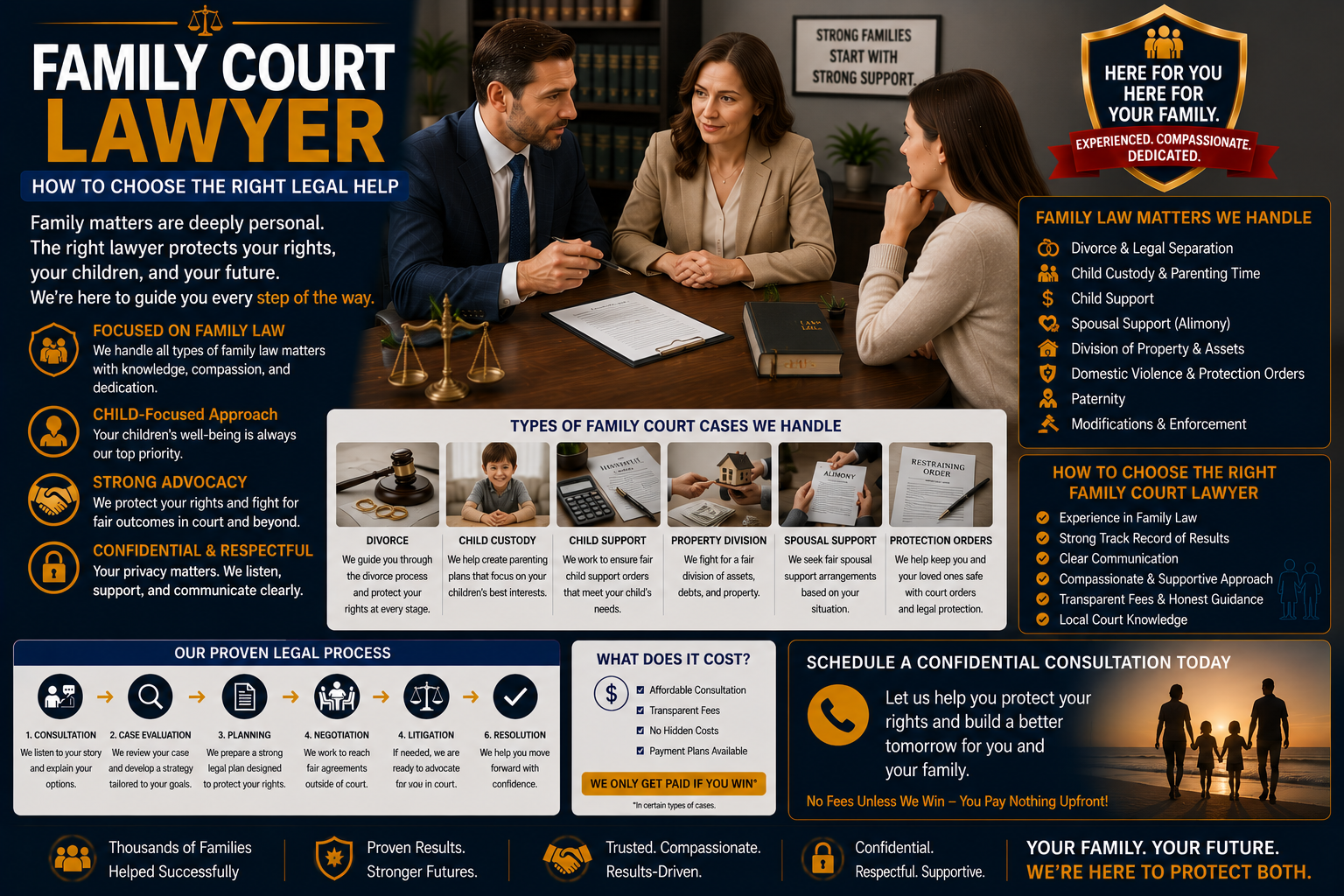
When Should You Hire a Family Court Lawyer?
Although not every family dispute requires litigation, legal representation may be beneficial when important rights, finances, or parenting issues are involved.
- You are filing for divorce or responding to divorce papers.
- You are seeking child custody or visitation rights.
- You need to establish or modify child support.
- You are requesting spousal support or alimony.
- You need to enforce an existing court order.
- You are involved in a guardianship matter.
- You anticipate significant disagreements with the other party.
- Your case involves substantial assets or complex legal issues.
Common Cases Handled by Family Court Lawyers
| Case Type | Description |
|---|---|
| Divorce | Legal dissolution of marriage |
| Child Custody | Determining parental rights and responsibilities |
| Child Support | Financial support obligations for children |
| Spousal Support | Financial assistance between former spouses |
| Visitation Disputes | Parenting time and access issues |
| Guardianship | Appointment of legal guardians for minors or dependents |
| Adoption | Legal establishment of parent-child relationships |
| Protective Orders | Court orders addressing family safety concerns |
What Does a Family Court Lawyer Do?
- Explain family laws and court procedures.
- Prepare and file legal documents.
- Review evidence and financial records.
- Negotiate settlements between parties.
- Represent clients during mediation.
- Appear at hearings and trials.
- Advocate regarding custody and support matters.
- Request enforcement or modification of court orders.
- Provide guidance throughout the legal process.
Legal Issues Commonly Addressed in Family Court
| Issue | Examples |
|---|---|
| Parenting Rights | Custody schedules and decision-making authority |
| Financial Support | Child support and spousal maintenance |
| Property Division | Distribution of marital assets and debts |
| Enforcement Actions | Failure to comply with existing court orders |
| Modification Requests | Changes to existing custody or support orders |
Requirements for Filing a Family Court Case
Requirements vary based on the type of case and the laws of the jurisdiction.
| Requirement | Description |
|---|---|
| Legal Standing | The person filing must have a recognized legal interest |
| Jurisdiction | The court must have authority to hear the case |
| Required Documents | Petitions, financial disclosures, and supporting records |
| Filing Fees | Court filing fees may apply |
Documents Commonly Needed in Family Court Cases
- Marriage certificates.
- Birth certificates of children.
- Financial statements and tax returns.
- Pay stubs and employment records.
- Bank account information.
- Property ownership records.
- Existing court orders.
- School and medical records for children.
- Communication records between parties.
How Much Does a Family Court Lawyer Cost?
Family law attorney fees vary depending on the type of case, complexity of issues, geographic location, and whether the matter settles or proceeds to trial.
| Fee Structure | Description |
|---|---|
| Hourly Billing | Most common billing method in family court cases |
| Retainer Fee | Advance deposit used for future legal services |
| Flat Fee | Sometimes available for uncontested matters |
| Mediation Costs | Additional expenses for alternative dispute resolution |
Before hiring an attorney, request a written fee agreement that explains billing practices, costs, and potential additional expenses.
Family Court Process: Step-by-Step
Step 1: Initial Consultation
A lawyer reviews your situation, explains applicable laws, and discusses available legal options.
Step 2: Case Evaluation and Preparation
The attorney gathers facts, reviews documents, and develops a legal strategy.
Step 3: Filing Legal Documents
Required petitions, motions, or other legal filings are submitted to the court.
Step 4: Service of Process
The opposing party receives formal notice of the legal action.
Step 5: Financial Disclosure and Evidence Exchange
Parties exchange information and evidence relevant to the dispute.
Step 6: Negotiation or Mediation
Many family disputes are resolved through settlement discussions or mediation.
Step 7: Court Hearings
If disputes remain unresolved, the court conducts hearings or a trial.
Step 8: Final Court Order
The judge issues a legally binding order resolving the disputed issues.
Factors That May Affect Family Court Cases
| Factor | Potential Impact |
|---|---|
| Presence of Children | May increase complexity and require additional court review |
| Level of Conflict | Highly contested matters often require more legal work |
| Financial Complexity | Substantial assets may require expert analysis |
| Evidence Available | Documentation may influence court decisions |
| Applicable Family Laws | Local laws affect procedures and outcomes |
Benefits of Hiring a Family Court Lawyer
- Professional guidance regarding family law procedures.
- Assistance preparing accurate legal documents.
- Protection of legal and financial interests.
- Representation during negotiations and court hearings.
- Knowledge of filing deadlines and procedural rules.
- Support during emotionally challenging legal disputes.
Risks and Considerations
- Family litigation may be time-consuming and expensive.
- Court proceedings can be emotionally difficult.
- Outcomes depend on evidence, facts, and applicable laws.
- Family laws vary significantly by jurisdiction.
- No attorney can guarantee a specific court decision.
Child Custody Considerations in Family Court
When children are involved, courts generally focus on the child’s best interests. Factors considered may include parental involvement, stability, educational needs, health considerations, and each parent’s ability to provide appropriate care.
Custody arrangements often address physical custody, legal custody, parenting schedules, holidays, and decision-making responsibilities.
Enforcing or Modifying Existing Court Orders
Family court lawyers frequently assist clients with:
- Enforcing unpaid child support.
- Modifying custody arrangements.
- Changing visitation schedules.
- Adjusting support obligations.
- Addressing violations of existing court orders.
How to Choose the Right Family Court Lawyer
- Look for substantial family law experience.
- Ask how frequently the attorney appears in family court.
- Discuss communication expectations and availability.
- Understand billing practices and costs.
- Determine who will personally handle your case.
- Review professional credentials and client feedback.
Questions to Ask Before Hiring a Lawyer
- How much of your practice focuses on family law?
- Have you handled cases similar to mine?
- What fee arrangement do you use?
- What documents should I gather?
- Will my case likely require court appearances?
- Who will personally work on my case?
- How will I receive updates about my case?
Important Legal Considerations
Family laws, custody standards, support guidelines, and court procedures differ significantly by jurisdiction.
Seeking legal advice early may help individuals understand their rights, preserve important evidence, and comply with filing requirements.
No attorney can ethically guarantee custody outcomes, support awards, or successful legal results.
Educational Disclaimer
This information is for educational purposes only and should not be considered legal advice. Laws and legal procedures may vary by jurisdiction.
Frequently Asked Questions
What does a family court lawyer do?
A family court lawyer represents clients in matters involving divorce, child custody, support, guardianship, and other family law disputes.
How much does a family court lawyer cost?
Costs vary depending on the type of case, complexity, attorney experience, and whether litigation is necessary.
Do I need a lawyer for family court?
While legal representation is not always required, many people consult attorneys when significant rights, finances, or parenting issues are involved.
How long does a family court case take?
Timelines vary based on case complexity, court schedules, and whether disputes can be resolved through settlement.
Can a family court lawyer guarantee custody of my child?
No attorney can ethically guarantee court decisions or custody outcomes.
What documents should I bring to a consultation?
Relevant court papers, financial records, identification documents, and information concerning children are commonly helpful.
Can family disputes be resolved without trial?
Yes. Many family law disputes are resolved through negotiation, mediation, or settlement.
Can existing custody or support orders be changed?
Modifications may be available when circumstances change significantly, subject to local laws.
What happens if someone violates a family court order?
The court may provide enforcement remedies depending on the circumstances and applicable laws.
How do I choose the right family court lawyer?
Consider family law experience, communication practices, fees, and experience handling cases similar to yours.
Related Topics
- Best Divorce Lawyer: Costs, Process and Hiring Guide
- Child Custody Lawyer: Custody Rights and Legal Process Guide
- Family Law Attorney: Services, Costs and Hiring Guide
- Divorce Mediation Lawyer: Alternative Dispute Resolution Guide
- Family Immigration Lawyer