
A divorce lawyer helps individuals navigate the legal process of ending a marriage, including child custody, property division, spousal support, and settlement negotiations. The best divorce lawyer for your situation is one with relevant family law experience, clear communication practices, and a fee structure that fits your needs.
Best Divorce Lawyer: Costs, Process & Hiring Guide
Divorce is one of the most significant legal and personal decisions many individuals will experience. Beyond the emotional aspects, divorce often involves important legal issues such as property division, child custody, child support, spousal support, and financial planning.
Many people searching for the best divorce lawyer are not necessarily looking for a universally “best” attorney. Instead, they want to find the right lawyer for their specific circumstances, understand legal costs, learn about the divorce process, and determine what documents and information they will need.
This guide explains what divorce lawyers do, when legal representation may be beneficial, common attorney fee structures, and how to choose a lawyer that meets your family’s needs.
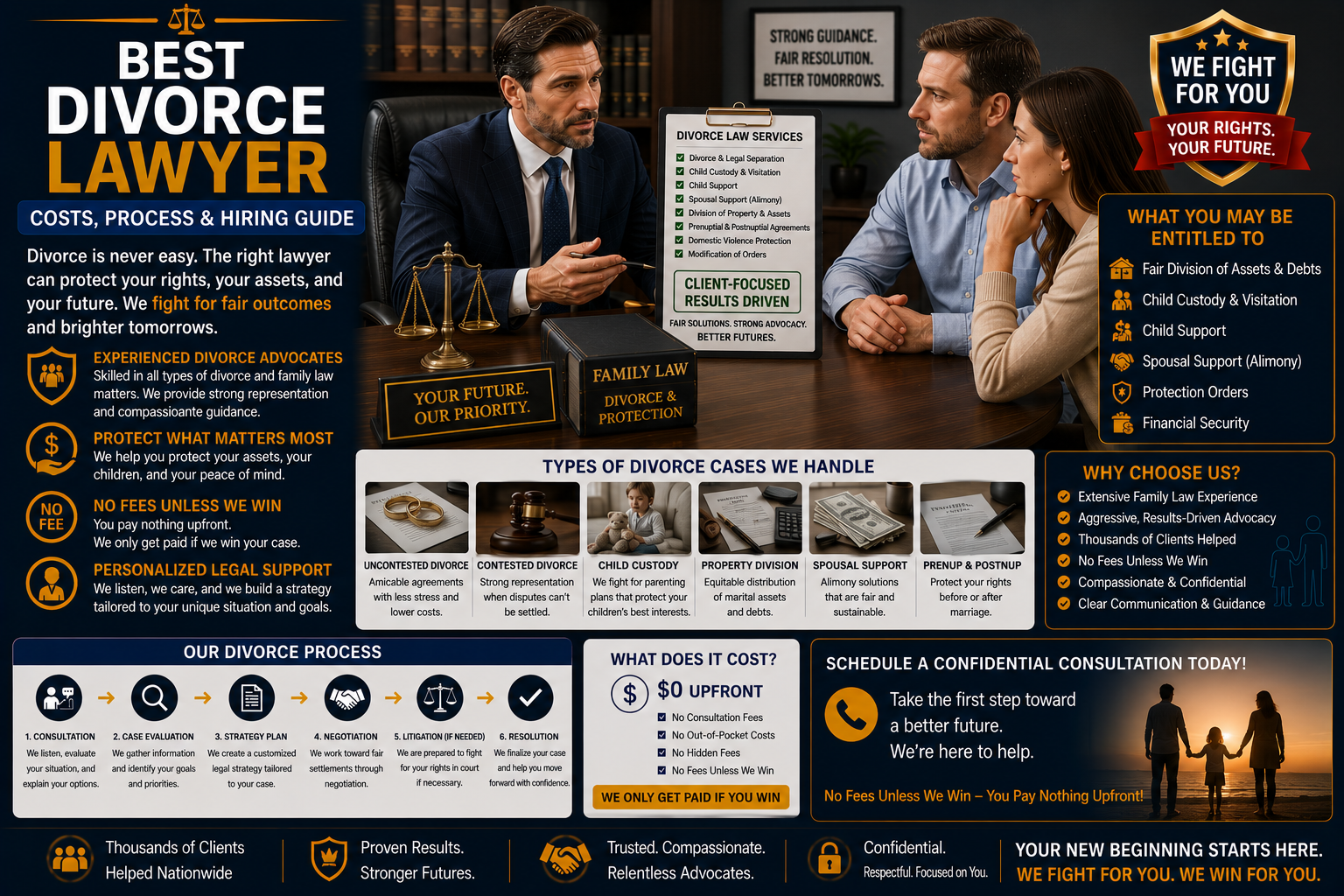
What Does a Divorce Lawyer Do?
A divorce lawyer is a family law attorney who represents spouses during the legal process of dissolving a marriage. Depending on the circumstances, an attorney may assist with negotiations, mediation, settlement agreements, litigation, and post-divorce modifications.
Divorce lawyers commonly handle:
- Divorce filings and legal paperwork.
- Child custody and parenting plans.
- Child support matters.
- Spousal support or alimony issues.
- Division of marital assets and debts.
- Settlement negotiations.
- Mediation and dispute resolution.
- Court hearings and trials.
- Post-divorce modifications and enforcement actions.
When Should You Hire a Divorce Lawyer?
While some uncontested divorces may proceed with limited legal assistance, many individuals choose to consult an attorney when significant legal or financial issues are involved.
- You and your spouse disagree about ending the marriage.
- Children are involved.
- You own a home, business, or substantial assets.
- You expect disputes regarding custody or visitation.
- One spouse controls most financial information.
- Domestic violence or safety concerns exist.
- Your spouse has already retained legal counsel.
- You anticipate disagreements regarding alimony or support.
Types of Divorce Cases
| Divorce Type | Description |
|---|---|
| Uncontested Divorce | Both spouses generally agree on major issues |
| Contested Divorce | Spouses disagree on one or more important issues |
| Mediated Divorce | Parties work with a neutral mediator to resolve disputes |
| Collaborative Divorce | Both spouses and attorneys negotiate outside court |
| Default Divorce | One spouse does not respond to legal proceedings |
Legal Issues Commonly Addressed During Divorce
| Issue | Examples |
|---|---|
| Child Custody | Physical custody, legal custody, parenting schedules |
| Child Support | Financial support obligations for children |
| Property Division | Homes, bank accounts, investments, and debts |
| Spousal Support | Temporary or long-term financial support |
| Business Interests | Valuation and division of business assets |
| Retirement Accounts | Pensions, retirement plans, and investment accounts |
How Much Does a Divorce Lawyer Cost?
Divorce attorney fees vary significantly depending on the complexity of the case, the level of conflict, geographic location, and whether the matter proceeds to trial.
| Fee Structure | Description |
|---|---|
| Hourly Billing | Most common fee arrangement in divorce cases |
| Retainer Fee | Advance deposit used to pay future legal services |
| Flat Fee | Sometimes available for uncontested divorces |
| Mediation Fees | Costs associated with divorce mediation services |
Before hiring a lawyer, ask for a written fee agreement explaining billing practices, retainers, court costs, and additional expenses.
Documents Often Needed for Divorce
- Marriage certificate.
- Tax returns.
- Bank account statements.
- Pay stubs and employment records.
- Mortgage and property records.
- Retirement account statements.
- Credit card and loan information.
- Business ownership records.
- Insurance policies.
- Children’s educational and healthcare information.
Divorce Process: Step-by-Step
Step 1: Initial Consultation
A divorce lawyer reviews your circumstances, explains applicable laws, and discusses potential legal strategies.
Step 2: Filing the Divorce Petition
One spouse formally initiates legal proceedings by filing required court documents.
Step 3: Service of Process
The other spouse receives official notice of the divorce filing.
Step 4: Financial Disclosure
Both spouses typically exchange information regarding assets, income, debts, and expenses.
Step 5: Negotiation and Settlement Discussions
Many divorce cases are resolved through negotiation, mediation, or collaborative processes.
Step 6: Temporary Orders
Courts may issue temporary orders regarding custody, support, or property use while the case is pending.
Step 7: Trial if Necessary
If disputes remain unresolved, a judge may decide contested issues after a court hearing or trial.
Step 8: Final Divorce Decree
Once all issues are resolved, the court enters a final judgment ending the marriage.
Factors That Affect Divorce Outcomes
| Factor | Potential Impact |
|---|---|
| Presence of Children | May increase complexity and legal issues |
| Value of Marital Assets | Higher-value estates often require detailed analysis |
| Level of Conflict | Contested matters generally require more legal work |
| State Laws | Property division and support laws vary by jurisdiction |
| Availability of Evidence | Documentation may influence disputed issues |
How to Choose the Best Divorce Lawyer for Your Situation
The best divorce lawyer is not necessarily the most expensive or the most advertised attorney. The right lawyer depends on your goals, family circumstances, budget, and the complexity of your case.
- Look for substantial family law experience.
- Ask how often the attorney handles divorce cases.
- Discuss communication expectations.
- Understand billing practices and estimated costs.
- Ask about mediation and settlement experience.
- Determine who will personally manage your case.
- Review client testimonials and professional credentials.
Questions to Ask During a Consultation
- How much of your practice focuses on family law?
- Have you handled cases similar to mine?
- What fee arrangement do you use?
- What documents should I gather?
- Will my case likely require court appearances?
- How will you communicate case updates?
- Who will work on my case day-to-day?
Benefits of Hiring an Experienced Divorce Lawyer
- Professional guidance throughout the legal process.
- Protection of legal and financial interests.
- Assistance preparing and reviewing legal documents.
- Representation during negotiations and court proceedings.
- Knowledge of family law procedures and deadlines.
- Support when addressing complex custody or property issues.
Risks and Considerations
- Divorce litigation can be expensive and time-consuming.
- Family law outcomes vary significantly by jurisdiction.
- Emotional conflicts may complicate settlement discussions.
- Court decisions depend on evidence and applicable laws.
- No attorney can guarantee a specific result.
Child Custody Considerations
When children are involved, courts typically focus on the child’s best interests. Factors considered may include each parent’s ability to provide care, the child’s needs, family stability, and other legally relevant considerations.
Parents are often encouraged to develop parenting plans addressing custody schedules, holidays, education, healthcare decisions, and communication.
Property Division Considerations
Property division laws vary by jurisdiction. Some states follow community property rules, while others apply equitable distribution principles.
Marital property may include:
- Real estate.
- Bank accounts.
- Retirement savings.
- Investment accounts.
- Business interests.
- Vehicles.
- Debts and liabilities.
Time Limits and Filing Requirements
Divorce procedures, residency requirements, waiting periods, and filing deadlines vary by jurisdiction. Consulting an attorney early may help ensure compliance with local legal requirements.
Important Legal Considerations
Family laws, custody rules, property division standards, and support obligations differ significantly by jurisdiction.
Early legal consultation may help individuals understand their rights, preserve financial information, and evaluate available options.
No attorney can ethically guarantee custody arrangements, property awards, support amounts, or successful outcomes.
Educational Disclaimer
This information is for educational purposes only and should not be considered legal advice. Laws and legal procedures may vary by jurisdiction.
Frequently Asked Questions
How much does a divorce lawyer cost?
Costs vary depending on case complexity, attorney experience, location, and whether the divorce is contested or uncontested.
Do I need a lawyer for an uncontested divorce?
Some individuals complete uncontested divorces with limited legal assistance, but consulting an attorney may still be beneficial.
How long does a divorce take?
Timelines vary depending on state laws, court schedules, and whether disputes exist.
Can a divorce lawyer guarantee custody of my children?
No attorney can ethically guarantee custody outcomes or court decisions.
What documents should I gather before meeting a lawyer?
Financial records, tax returns, property information, and marriage documents are commonly requested.
Will my divorce go to court?
Many divorces settle outside court, although contested matters may require hearings or trials.
What is the difference between legal and physical custody?
Legal custody generally concerns decision-making authority, while physical custody addresses where a child lives.
Can spouses negotiate a settlement without trial?
Yes. Many divorces are resolved through negotiation, mediation, or collaborative law processes.
What if my spouse already hired a lawyer?
You may wish to consult your own attorney to understand and protect your legal interests.
How do I choose the best divorce lawyer?
Consider family law experience, communication style, fee structure, and whether the attorney has handled similar cases.
Related Topics
- Child Custody Lawyer: Custody Rights and Legal Process Guide
- Family Law Attorney: Costs, Services and Hiring Guide
- Family Immigration Lawyer