
Here is complete details about Wrongful Death Claim Attorney and Understanding Legal Representation After a Fatal Accident. Losing a loved one unexpectedly can create profound emotional and financial challenges for surviving family members. When a death allegedly results from another person’s negligence, recklessness, or wrongful conduct, certain family members or estate representatives may have the right to pursue a wrongful death claim under applicable state law.
Because wrongful death cases often involve complex legal and procedural issues, many families seek assistance from a wrongful death claim attorney. These cases frequently require extensive investigation, expert analysis, and careful evaluation of damages.
This guide explains what wrongful death attorneys do, how to choose legal representation, potential compensation available in wrongful death cases, and important legal considerations families should understand.
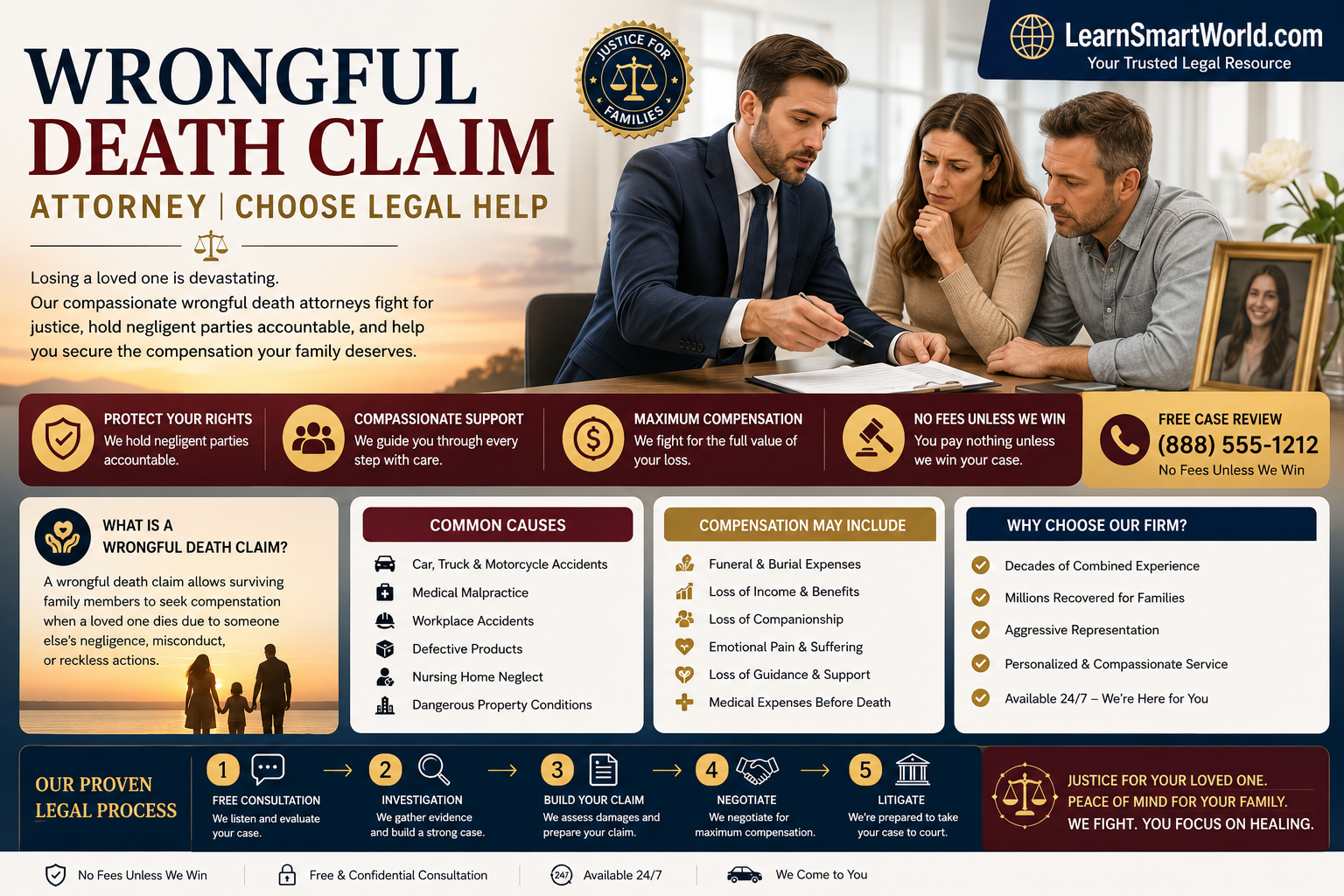
What Is a Wrongful Death Claim?
A wrongful death claim is a civil legal action brought when an individual’s death is allegedly caused by another party’s negligent, reckless, or intentional conduct.
Best Personal Injury Lawyer services are especially important in wrongful death cases, as wrongful death laws vary significantly among jurisdictions, including who may file a claim, available damages, and applicable filing deadlines. An experienced attorney can help families understand their legal rights and pursue compensation in accordance with the laws that apply to their case.
- Motor vehicle accidents.
- Commercial truck collisions.
- Medical malpractice incidents.
- Workplace accidents.
- Defective products.
- Premises liability incidents.
- Nursing home neglect or abuse.
- Construction accidents.
- Pedestrian and bicycle accidents.
What Does a Wrongful Death Claim Attorney Do?
A wrongful death attorney represents surviving family members or estate representatives throughout the legal process.
Typical responsibilities include:
- Investigating the circumstances surrounding the death.
- Gathering and preserving evidence.
- Reviewing medical and accident records.
- Consulting expert witnesses.
- Identifying potentially liable parties.
- Calculating damages.
- Negotiating with insurance companies.
- Filing lawsuits when necessary.
- Representing families during litigation and trial.
Who May File a Wrongful Death Lawsuit?
The right to file a wrongful death lawsuit depends on state law. In many jurisdictions, eligible parties may include:
- Spouses.
- Children.
- Parents.
- Personal representatives of the estate.
- Certain dependent relatives.
Because eligibility rules vary by jurisdiction, families should consult qualified legal counsel regarding who may legally pursue a claim.
Qualities to Look for in a Wrongful Death Claim Attorney
Relevant Experience
Wrongful death litigation often involves complex factual and legal issues. Attorneys with substantial experience handling fatal accident claims may possess greater familiarity with applicable procedures and damages issues.
Potential clients should ask:
- How many wrongful death cases have you handled?
- What percentage of your practice focuses on personal injury and wrongful death claims?
- Have you handled cases involving circumstances similar to ours?
Trial Experience
While many wrongful death cases resolve through settlement negotiations, some disputes proceed to court. Attorneys with litigation experience may be better prepared if trial becomes necessary.
Access to Professional Resources
Wrongful death cases frequently require assistance from experts, including:
- Medical professionals.
- Accident reconstruction specialists.
- Economic experts.
- Vocational experts.
- Forensic specialists.
Experienced firms often possess resources necessary to investigate and prepare complex claims.
Compassionate Communication
Families navigating the loss of a loved one often value attorneys who communicate clearly, answer questions promptly, and provide realistic expectations regarding the legal process.
How to Compare Wrongful Death Attorneys
| Evaluation Factor | Why It Matters |
|---|---|
| Relevant Experience | Demonstrates familiarity with wrongful death litigation. |
| Trial Experience | Indicates preparedness for courtroom proceedings. |
| Communication Skills | Helps families remain informed throughout the case. |
| Resources | Supports investigations and expert testimony. |
| Professional Reputation | Provides insight into ethical and professional standards. |
| Fee Structure | Clarifies financial expectations. |
Evidence Commonly Used in Wrongful Death Cases
The evidence required depends on the circumstances surrounding the death.
Common examples include:
- Medical records.
- Death certificates.
- Autopsy reports.
- Police reports.
- Accident reconstruction reports.
- Photographs and video evidence.
- Witness statements.
- Employment and income records.
- Expert witness testimony.
- Maintenance and inspection records.
Potential Compensation in Wrongful Death Claims
Available damages vary by jurisdiction and individual circumstances. Compensation may differ depending on who files the claim and applicable state law.
| Potential Damages | Description |
|---|---|
| Medical Expenses | Healthcare costs incurred before death. |
| Funeral and Burial Costs | Reasonable funeral-related expenses. |
| Loss of Financial Support | Income and benefits the deceased may have provided. |
| Loss of Services | Value of household contributions and assistance. |
| Loss of Companionship | Non-economic losses recognized under certain laws. |
| Pain and Suffering | Damages permitted under applicable state law. |
No attorney can ethically guarantee compensation or predict the value of a wrongful death claim.
Common Causes of Wrongful Death Claims
- Automobile accidents.
- Truck accidents.
- Medical negligence.
- Defective consumer products.
- Unsafe property conditions.
- Construction accidents.
- Workplace incidents.
- Nursing home neglect.
- Criminal acts.
Understanding Attorney Fees
Many wrongful death attorneys work under contingency fee arrangements. Under these agreements, attorney fees are generally collected only if compensation is recovered.
| Fee Component | Description |
|---|---|
| Contingency Fee | A percentage of compensation recovered, outlined in a written agreement. |
| Court Costs | Fees associated with litigation and court filings. |
| Expert Witness Fees | Expenses for professional expert testimony. |
| Investigation Costs | Expenses related to evidence gathering and case preparation. |
Families should carefully review written fee agreements before retaining counsel.
Statutes of Limitations and Filing Deadlines
States establish deadlines, known as statutes of limitations, for filing wrongful death lawsuits. Missing these deadlines may affect legal rights.
Applicable deadlines depend on:
- The state where the incident occurred.
- The identity of the defendant.
- The type of claim asserted.
- Whether government entities are involved.
- The specific facts of the case.
Families should seek legal guidance promptly regarding applicable filing deadlines.
Alternatives to Litigation
Some wrongful death disputes may resolve without a trial.
Alternative dispute resolution methods may include:
- Settlement negotiations.
- Mediation.
- Arbitration.
- Settlement conferences.
Risks and Considerations When Hiring an Attorney
- Be cautious of guaranteed outcomes.
- Review all fee agreements carefully.
- Confirm the attorney’s experience with wrongful death litigation.
- Understand who will primarily handle the case.
- Ask how communication will occur throughout the representation.
Educational Disclaimer
This information is for educational purposes only and should not be considered legal advice. Laws and legal procedures may vary by jurisdiction.
Frequently Asked Questions
What is a wrongful death claim attorney?
A wrongful death claim attorney represents families or estate representatives seeking legal remedies after a death allegedly caused by another party’s wrongful conduct.
Who can file a wrongful death lawsuit?
Eligibility varies by state, but spouses, children, parents, and estate representatives commonly possess filing rights.
How much does a wrongful death attorney cost?
Many attorneys use contingency fee arrangements, although fee structures vary by law firm.
How long do wrongful death cases take?
Case timelines depend on factors such as complexity, evidence, insurance negotiations, and court schedules.
Can an attorney guarantee compensation?
No ethical attorney can guarantee compensation, settlement amounts, or lawsuit outcomes.
What evidence is important in a wrongful death case?
Medical records, accident reports, expert testimony, witness statements, and financial documentation are often important.
Will every wrongful death case go to trial?
No. Many cases settle through negotiations or alternative dispute resolution processes.
What damages are available in wrongful death claims?
Available damages vary by jurisdiction and may include financial losses, funeral expenses, and other legally recognized damages.
How soon should a family contact an attorney?
Families often seek legal guidance promptly because important evidence and filing deadlines may affect a claim.
Can multiple family members file claims?
The answer depends on state law and the specific circumstances of the case.
Related Topics
- How Wrongful Death Lawsuits Differ From Survival Actions
- Understanding Damages in Wrongful Death Cases
- How Statutes of Limitations Affect Fatal Accident Claims
- Evidence Needed in Wrongful Death Litigation
- Common Causes of Wrongful Death Lawsuits