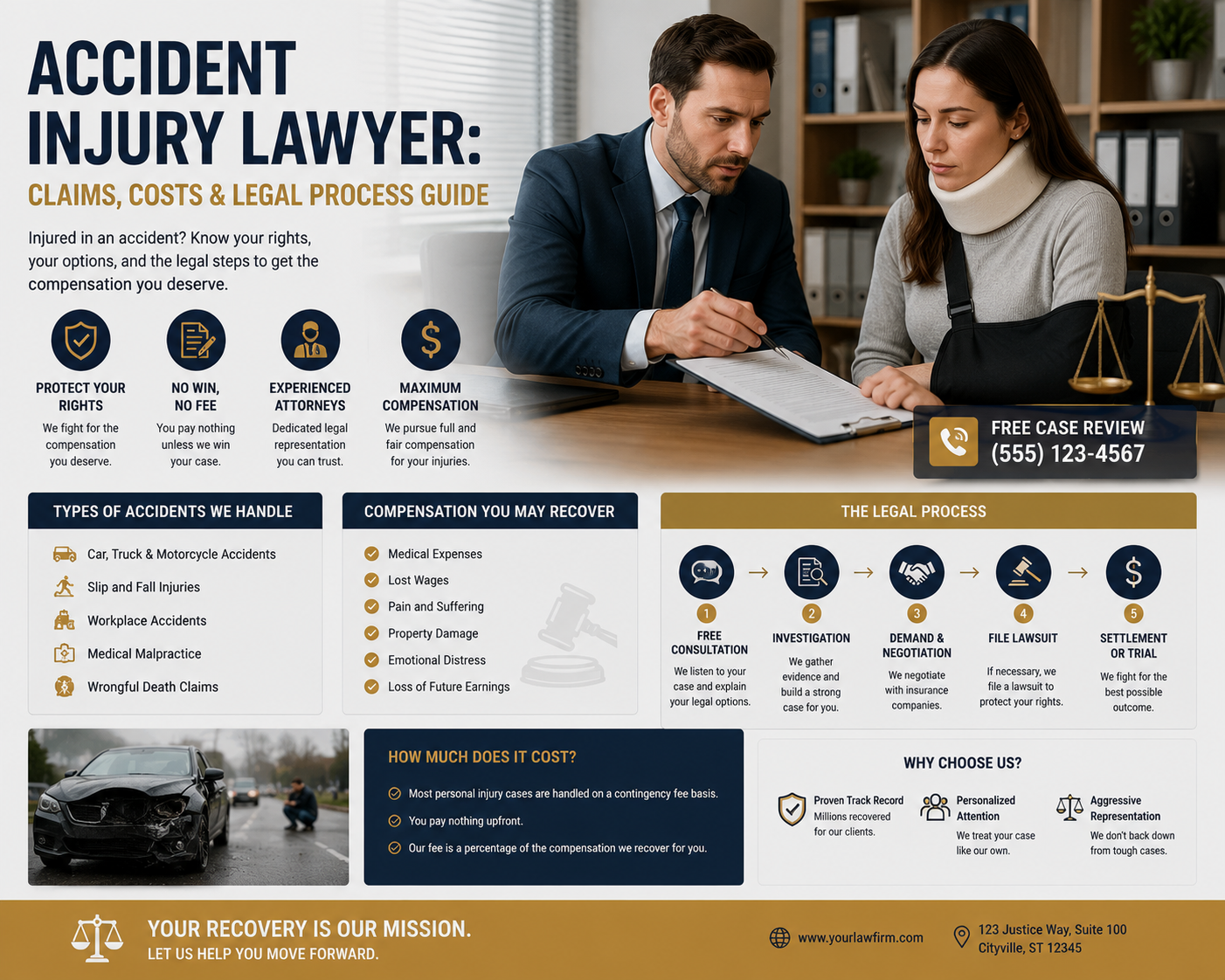
Accidents can happen unexpectedly and may create serious physical, emotional, and financial challenges. A person injured in a car crash, workplace accident, slip and fall, or another harmful incident may face medical bills, lost income, property damage, and uncertainty about how to recover compensation. An accident injury lawyer helps injured individuals understand their legal rights and navigate the process of seeking compensation from responsible parties.
These attorneys focus on personal injury law and assist clients with insurance claims, evidence gathering, settlement negotiations, and court proceedings when required. Understanding when to hire an accident injury lawyer, what these professionals do, how claims work, and what factors affect compensation can help injured individuals make informed decisions after an accident.
What Is an Accident Injury Lawyer?
An accident injury lawyer is a legal professional who represents individuals who have suffered injuries due to accidents caused by another person’s negligence, carelessness, or wrongful conduct.
These lawyers handle personal injury cases where the injured party seeks financial compensation for damages such as medical expenses, lost wages, pain and suffering, rehabilitation costs, and other accident-related losses.
The main purpose of an accident injury lawyer is to protect the injured person’s legal interests while dealing with insurance companies, opposing parties, and the legal system.
Legal Definition of an Accident Injury Claim
An accident injury claim is a legal demand for compensation made by an injured person against an individual, company, insurance provider, or other responsible party.
To establish a successful personal injury claim, the injured party generally needs to show that:
- Another person or organization owed a duty of care.
- The responsible party breached that duty through negligence or wrongful conduct.
- The breach caused an accident or injury.
- The injury resulted in financial or personal damages.
Each case depends on specific facts, available evidence, applicable laws, and jurisdictional requirements.
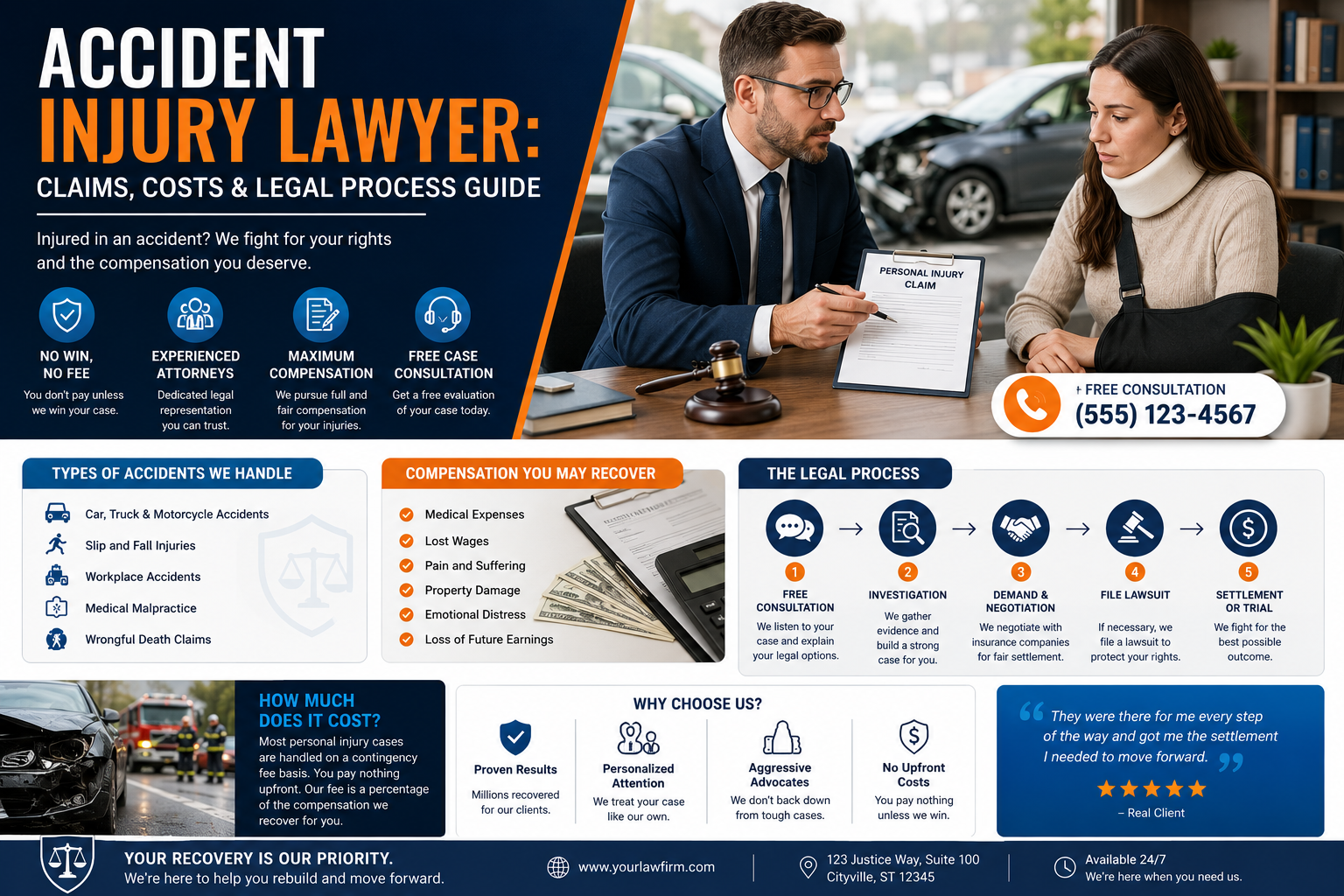
What Does an Accident Injury Lawyer Do?
An accident injury lawyer provides legal guidance throughout the injury claim process. Their role often begins shortly after an accident occurs and may continue until the claim is resolved through settlement or court judgment.
Investigating the Accident
A lawyer reviews the circumstances surrounding the accident to determine how it happened and who may be legally responsible.
This investigation may include:
- Reviewing accident reports
- Analyzing photographs and videos
- Interviewing witnesses
- Examining medical records
- Consulting accident reconstruction specialists
- Reviewing insurance documents
Handling Insurance Companies
Insurance companies often investigate injury claims before offering settlements. An accident injury lawyer communicates with insurers, helps prepare claim documentation, and works to ensure that the injured person’s legal rights are considered.
Insurance companies may attempt to reduce claim payments by questioning liability, injury severity, or medical expenses. Legal representation can help injured individuals better understand their options during negotiations. A Workplace Injury Lawyer can provide guidance through the claims process, help protect workers’ rights, and assist in seeking fair compensation when workplace injuries create legal challenges.
Calculating Damages
Accident injury lawyers evaluate the financial impact of an accident by considering both current and future losses.
Potential damages may include:
- Medical treatment expenses
- Emergency care costs
- Prescription expenses
- Lost wages
- Reduced earning ability
- Physical therapy costs
- Pain and suffering
- Emotional distress
- Property damage
The available compensation depends on the facts of the case and applicable laws.
Types of Cases Handled by Accident Injury Lawyers
Accident injury lawyers may handle many different types of personal injury cases. The legal approach depends on the cause of the accident, responsible parties, and severity of injuries.
| Accident Type | Common Legal Issues | Examples of Damages |
|---|---|---|
| Car Accidents | Driver negligence, distracted driving, speeding, insurance disputes | Medical bills, vehicle repairs, lost income |
| Truck Accidents | Commercial liability, driver errors, company responsibility | Serious injuries, long-term medical costs |
| Motorcycle Accidents | Driver awareness, road conditions, safety issues | Trauma injuries, rehabilitation expenses |
| Workplace Accidents | Employer duties, workers compensation issues | Medical costs, lost wages |
| Slip and Fall Accidents | Property owner negligence, unsafe conditions | Injury treatment and financial losses |
| Medical Negligence Cases | Professional negligence, standard of care issues | Medical damages and related losses |
Who May Need an Accident Injury Lawyer?
Not every accident requires legal representation. However, consulting an accident injury lawyer may be beneficial when injuries are serious, liability is disputed, or insurance companies are not offering fair compensation. An Injury Claim Lawyer can help evaluate the situation, explain available options, and provide support throughout the claims process when legal guidance is needed.
Common situations where legal help may be useful include:
- Serious or permanent injuries
- Multiple parties involved in the accident
- Disputed responsibility for the accident
- Insurance claim denial
- Low settlement offers
- Long-term medical treatment needs
- Loss of employment or income
- Wrongful death situations
An attorney can help evaluate whether pursuing compensation is appropriate based on the circumstances.
Common Causes of Accident Injuries
Accident injury claims often arise from negligence. Negligence means a person or organization failed to act with reasonable care, resulting in harm to another person.
Common causes include:
- Distracted driving
- Speeding or reckless driving
- Driving under the influence
- Unsafe workplace conditions
- Defective products
- Poor property maintenance
- Failure to follow safety procedures
- Medical mistakes or professional negligence
Determining fault requires reviewing evidence and applying relevant personal injury laws.
How an Accident Injury Claim Process Begins
The legal process usually starts immediately after an accident. Taking the correct steps early can help preserve evidence and protect potential legal rights.
Step 1: Seek Medical Treatment
Medical attention should be a priority after an accident. Medical records provide important documentation connecting injuries to the incident.
Step 2: Document the Accident
Important evidence may include:
- Photos of injuries and accident scenes
- Police or incident reports
- Witness information
- Medical documents
- Insurance communication
Step 3: Consult an Accident Injury Lawyer
A legal consultation can help an injured person understand available options, possible challenges, and the next steps in the claim process.
An attorney can review whether the claim involves negligence, insurance disputes, or other legal issues.
Important Considerations Before Filing a Claim
Accident injury cases can involve complex legal and insurance issues. Factors such as deadlines, evidence availability, liability disputes, and insurance coverage can significantly affect the outcome.
- Every jurisdiction has different legal rules and deadlines.
- Evidence can become harder to obtain as time passes.
- Settlement decisions should be carefully evaluated.
- Legal outcomes depend on specific case facts.
This information is for educational purposes only and should not be considered legal advice. Laws and legal procedures may vary by jurisdiction.
Requirements for an Accident Injury Claim
Before pursuing an accident injury claim, it is important to understand the basic elements that usually determine whether a legal claim may be possible. Although laws differ by location, most personal injury claims require proof that another party was legally responsible for causing harm.
An accident injury lawyer typically evaluates several important factors before accepting or pursuing a case.
1. Duty of Care
The first requirement is showing that the other party had a responsibility to act reasonably and avoid causing harm.
Examples include:
- Drivers must operate vehicles safely.
- Property owners must maintain reasonably safe conditions.
- Employers must follow workplace safety requirements.
- Professionals must provide services according to accepted standards.
2. Breach of Duty
A claim may require evidence that the responsible party failed to meet their legal obligation. This failure may involve careless behavior, unsafe decisions, or failure to follow required procedures.
3. Causation
The injured person generally needs to demonstrate that the other party’s actions directly caused the accident or injuries.
4. Damages
The injured party must usually show measurable harm, such as medical expenses, lost income, property damage, or other losses.
| Claim Requirement | Meaning | Example |
|---|---|---|
| Duty of Care | Legal responsibility to act safely | A driver following traffic laws |
| Breach | Failure to meet that responsibility | Distracted driving causing a crash |
| Causation | Connection between actions and injury | Accident directly causes medical harm |
| Damages | Financial or personal losses | Medical bills and lost wages |
Evidence Needed for an Accident Injury Case
Evidence plays a critical role in personal injury claims. Strong documentation can help establish what happened, who was responsible, and the extent of the injuries.
Common types of evidence include:
- Police accident reports
- Medical records and treatment history
- Photographs of injuries and accident locations
- Video footage
- Witness statements
- Insurance records
- Employment records showing lost wages
- Expert opinions
- Vehicle damage reports
An accident injury lawyer reviews available evidence to determine whether it supports liability and compensation claims.
The Legal Process After Hiring an Accident Injury Lawyer
The process of resolving an accident injury case varies depending on the facts, insurance involvement, and whether the matter is settled or goes to court.
Step 1: Initial Consultation
The process usually begins with a consultation where the lawyer reviews the accident details, injuries, available evidence, and potential legal options.
During this stage, the attorney may ask about:
- How the accident occurred
- Who was involved
- Medical treatment received
- Insurance communication
- Financial losses
Step 2: Investigation and Evidence Collection
The lawyer investigates the circumstances surrounding the accident and gathers supporting documents.
This may include:
- Reviewing official reports
- Interviewing witnesses
- Collecting medical documentation
- Analyzing liability issues
- Consulting specialists when necessary
Step 3: Insurance Claim Filing
Many accident cases begin through insurance claims. The lawyer communicates with insurance companies and presents documentation supporting the injured person’s losses.
Insurance negotiations may involve discussions about:
- Medical expenses
- Lost wages
- Property damage
- Future financial impacts
- Liability responsibility
Step 4: Settlement Negotiations
A significant number of personal injury cases are resolved through settlement negotiations rather than trial.
During negotiations, both sides may discuss compensation amounts based on:
- Strength of evidence
- Severity of injuries
- Insurance coverage limits
- Liability disputes
- Future damages
A settlement decision should be carefully evaluated because accepting an agreement may affect future legal rights related to the accident.
Step 5: Filing a Lawsuit
If negotiations do not result in an acceptable resolution, an injured person may choose to file a lawsuit, depending on applicable laws and circumstances.
The lawsuit process may involve:
- Complaint filing
- Response from the opposing party
- Discovery process
- Depositions
- Expert testimony
- Motions
- Trial proceedings
Settlement vs. Trial: Understanding the Difference
| Factor | Settlement | Trial |
|---|---|---|
| Process | Negotiated agreement between parties | Decision made through court proceedings |
| Timeline | Often faster than litigation | May take longer |
| Control | Parties influence final agreement | Judge or jury determines outcome |
| Risk | Predictable resolution | Uncertain result |
| Costs | Usually lower than trial | Can involve higher legal expenses |
Factors That Affect Accident Injury Compensation
The value of an accident injury claim depends on many factors. There is no guaranteed compensation amount because every case involves different circumstances.
Common factors considered include:
- Severity of injuries
- Medical treatment costs
- Length of recovery
- Permanent disability or impairment
- Lost income
- Future earning ability
- Insurance coverage available
- Strength of liability evidence
- Impact on daily life
- Applicable state laws
Types of Damages in Accident Injury Cases
Economic Damages
Economic damages compensate for measurable financial losses.
- Hospital bills
- Doctor visits
- Medication expenses
- Rehabilitation costs
- Lost wages
- Future medical expenses
Non-Economic Damages
Non-economic damages relate to personal impacts that may not have a direct financial value.
- Pain and suffering
- Emotional distress
- Loss of enjoyment of life
- Permanent limitations
Time Limits for Accident Injury Claims
Accident injury claims are generally subject to legal deadlines known as statutes of limitations. These deadlines determine how long an injured person has to begin legal action.
The time limit depends on factors such as:
- State or jurisdiction
- Type of accident
- Responsible party involved
- Nature of the injury
Failing to take action within the required timeframe may affect the ability to pursue compensation. Consulting a qualified legal professional early can help protect important rights.
Costs and Fees of Hiring an Accident Injury Lawyer
Many accident injury lawyers work on a contingency fee basis, meaning clients generally do not pay attorney fees unless compensation is recovered. However, fee structures vary between law firms.
Potential costs may include:
- Attorney contingency fees
- Court filing expenses
- Expert witness fees
- Investigation costs
- Administrative expenses
Before hiring a lawyer, clients should understand the fee agreement, potential expenses, and how costs will be handled.
This information is for educational purposes only and should not be considered legal advice. Laws and legal procedures may vary by jurisdiction.
How to Choose the Right Accident Injury Lawyer
Choosing an accident injury lawyer is an important decision because the attorney you select may influence how your claim is handled, how evidence is presented, and how effectively your legal rights are protected.
Not every lawyer has the same experience, resources, or approach. An attorney who regularly handles accident and personal injury cases may better understand insurance negotiations, liability disputes, medical documentation, and litigation procedures.
Important Factors to Consider When Hiring an Accident Injury Lawyer
- Experience with Similar Cases: Look for a lawyer who has handled cases involving accidents similar to yours, such as vehicle crashes, workplace injuries, or premises liability claims.
- Understanding of Personal Injury Law: Accident cases involve specific legal rules regarding negligence, damages, liability, and insurance claims.
- Communication Style: A good attorney should explain legal options clearly and keep clients informed about important developments.
- Resources and Case Support: Complex cases may require investigators, medical experts, accident reconstruction specialists, or other professional resources.
- Fee Structure: Understand how legal fees, expenses, and payment arrangements work before signing an agreement.
- Professional Reputation: Reviews, professional history, and legal standing may provide useful information when evaluating a lawyer.
Questions to Ask Before Hiring an Accident Injury Lawyer
Before choosing legal representation, injured individuals should ask questions that help determine whether the lawyer is a suitable match for their situation.
| Question | Why It Matters |
|---|---|
| How much experience do you have with accident injury cases? | Helps determine whether the lawyer understands similar legal issues. |
| Who will handle my case? | Clarifies whether the attorney or another team member manages communication and legal work. |
| What challenges do you see in my claim? | Provides a realistic understanding of potential obstacles. |
| How are legal fees calculated? | Helps avoid misunderstandings about costs. |
| What documents should I provide? | Helps organize important evidence early. |
| How will settlement decisions be made? | Explains how negotiation choices are handled. |
Benefits of Hiring an Accident Injury Lawyer
Legal representation is not required for every accident claim, but an experienced accident injury lawyer can provide several advantages, especially when cases involve serious injuries, disputed liability, or complicated insurance issues.
1. Knowledge of Legal Procedures
Personal injury claims involve deadlines, documentation requirements, negotiation processes, and legal standards. A lawyer helps clients understand these procedures and avoid common mistakes.
2. Better Understanding of Claim Value
Insurance companies evaluate claims based on various factors, including medical expenses, liability evidence, and policy limits. A lawyer can help analyze whether an offer reasonably reflects the damages involved.
3. Handling Insurance Negotiations
Insurance negotiations may involve disputes about responsibility, injury severity, or compensation amounts. An attorney can communicate with insurers and help present supporting evidence.
4. Access to Professional Resources
Some accident cases require additional support, including medical professionals, investigators, or specialists who can explain technical issues related to the accident.
5. Reducing Legal Stress
Recovering from injuries can be physically and emotionally difficult. Having legal guidance allows injured individuals to focus on medical recovery while the claim process is managed professionally.
Potential Drawbacks of Hiring an Accident Injury Lawyer
Although legal representation can provide benefits, injured individuals should also understand possible considerations before hiring an attorney.
- Legal Fees: Attorney fees and case expenses may reduce the final compensation amount.
- Time Commitment: Complex cases may require meetings, document reviews, and participation in legal procedures.
- No Guaranteed Outcome: Hiring a lawyer does not guarantee settlement approval, lawsuit success, or a specific compensation amount.
- Settlement Decisions: Cases may involve difficult decisions about accepting offers or continuing litigation.
Understanding both advantages and limitations helps individuals make informed choices about legal representation.
How Accident Injury Lawyers Negotiate With Insurance Companies
Insurance negotiations are often a major part of accident injury claims. Insurance providers evaluate claims based on policy coverage, evidence, liability, and financial damages.
An accident injury lawyer may assist by:
- Preparing a detailed demand package.
- Organizing medical records and bills.
- Presenting evidence supporting liability.
- Communicating directly with insurance representatives.
- Reviewing settlement proposals.
- Negotiating terms when appropriate.
What Is a Settlement Demand?
A settlement demand is a formal request for compensation that explains why the injured person believes payment is appropriate.
A demand package may include:
- Accident details
- Description of injuries
- Medical documentation
- Financial losses
- Supporting evidence
- Requested compensation amount
The insurance company may accept, reject, or negotiate the demand depending on its evaluation of the claim.
Common Mistakes Accident Victims Should Avoid
Actions taken immediately after an accident can affect a potential claim. Avoiding common mistakes may help preserve important legal rights.
1. Delaying Medical Treatment
Waiting too long to seek medical care may create questions about the connection between the accident and injuries.
2. Giving Recorded Statements Without Preparation
Insurance companies may request statements about an accident. Individuals should understand their rights and consider obtaining legal guidance before providing detailed statements.
3. Accepting the First Settlement Offer Too Quickly
Early settlement offers may not always account for future medical expenses, long-term effects, or additional damages.
4. Posting Accident Details Online
Social media posts may sometimes be reviewed during disputes. Accident victims should be cautious about sharing information publicly.
5. Failing to Preserve Evidence
Important evidence can disappear over time. Photographs, records, and witness information should be preserved whenever possible.
Accident Injury Lawyer vs Handling a Claim Alone
| Factor | Hiring a Lawyer | Handling Claim Alone |
|---|---|---|
| Legal Knowledge | Professional understanding of injury laws and procedures | Requires self-learning legal requirements |
| Insurance Negotiation | Attorney manages communication and negotiations | Individual handles insurer discussions |
| Cost | May involve legal fees | No attorney fees but requires personal time |
| Complex Cases | Useful for serious or disputed claims | May become difficult without legal experience |
| Decision Making | Receives legal guidance | Responsible for all decisions independently |
How Long Does an Accident Injury Case Take?
The timeline of an accident injury case depends on several factors, including injury severity, evidence availability, insurance cooperation, and whether the case settles or goes to trial.
Factors that may affect the timeline include:
- Length of medical treatment
- Complexity of liability issues
- Number of involved parties
- Insurance negotiations
- Court schedules if litigation occurs
Some claims may resolve through negotiations, while others may require extended legal proceedings.
Important Legal Considerations for Accident Victims
Accident injury law involves complex legal principles that vary by jurisdiction. Issues such as comparative negligence, insurance requirements, liability standards, and filing deadlines may affect the outcome of a claim.
For example, some jurisdictions reduce compensation when an injured person shares responsibility for causing an accident. Other areas may have different rules regarding fault, evidence, and damages.
Because legal procedures differ by location, accident victims should consider seeking advice from a qualified legal professional familiar with the applicable laws.
This information is for educational purposes only and should not be considered legal advice. Laws and legal procedures may vary by jurisdiction.
How to Choose the Right Accident Injury Lawyer
Choosing an accident injury lawyer is an important decision because the attorney you select may influence how your claim is handled, how evidence is presented, and how effectively your legal rights are protected.
Not every lawyer has the same experience, resources, or approach. An attorney who regularly handles accident and personal injury cases may better understand insurance negotiations, liability disputes, medical documentation, and litigation procedures.
Important Factors to Consider When Hiring an Accident Injury Lawyer
- Experience with Similar Cases: Look for a lawyer who has handled cases involving accidents similar to yours, such as vehicle crashes, workplace injuries, or premises liability claims.
- Understanding of Personal Injury Law: Accident cases involve specific legal rules regarding negligence, damages, liability, and insurance claims.
- Communication Style: A good attorney should explain legal options clearly and keep clients informed about important developments.
- Resources and Case Support: Complex cases may require investigators, medical experts, accident reconstruction specialists, or other professional resources.
- Fee Structure: Understand how legal fees, expenses, and payment arrangements work before signing an agreement.
- Professional Reputation: Reviews, professional history, and legal standing may provide useful information when evaluating a lawyer.
Questions to Ask Before Hiring an Accident Injury Lawyer
Before choosing legal representation, injured individuals should ask questions that help determine whether the lawyer is a suitable match for their situation.
| Question | Why It Matters |
|---|---|
| How much experience do you have with accident injury cases? | Helps determine whether the lawyer understands similar legal issues. |
| Who will handle my case? | Clarifies whether the attorney or another team member manages communication and legal work. |
| What challenges do you see in my claim? | Provides a realistic understanding of potential obstacles. |
| How are legal fees calculated? | Helps avoid misunderstandings about costs. |
| What documents should I provide? | Helps organize important evidence early. |
| How will settlement decisions be made? | Explains how negotiation choices are handled. |
Benefits of Hiring an Accident Injury Lawyer
Legal representation is not required for every accident claim, but an experienced accident injury lawyer can provide several advantages, especially when cases involve serious injuries, disputed liability, or complicated insurance issues.
1. Knowledge of Legal Procedures
Personal injury claims involve deadlines, documentation requirements, negotiation processes, and legal standards. A lawyer helps clients understand these procedures and avoid common mistakes.
2. Better Understanding of Claim Value
Insurance companies evaluate claims based on various factors, including medical expenses, liability evidence, and policy limits. A lawyer can help analyze whether an offer reasonably reflects the damages involved.
3. Handling Insurance Negotiations
Insurance negotiations may involve disputes about responsibility, injury severity, or compensation amounts. An attorney can communicate with insurers and help present supporting evidence.
4. Access to Professional Resources
Some accident cases require additional support, including medical professionals, investigators, or specialists who can explain technical issues related to the accident.
5. Reducing Legal Stress
Recovering from injuries can be physically and emotionally difficult. Having legal guidance allows injured individuals to focus on medical recovery while the claim process is managed professionally.
Potential Drawbacks of Hiring an Accident Injury Lawyer
Although legal representation can provide benefits, injured individuals should also understand possible considerations before hiring an attorney.
- Legal Fees: Attorney fees and case expenses may reduce the final compensation amount.
- Time Commitment: Complex cases may require meetings, document reviews, and participation in legal procedures.
- No Guaranteed Outcome: Hiring a lawyer does not guarantee settlement approval, lawsuit success, or a specific compensation amount.
- Settlement Decisions: Cases may involve difficult decisions about accepting offers or continuing litigation.
Understanding both advantages and limitations helps individuals make informed choices about legal representation.
How Accident Injury Lawyers Negotiate With Insurance Companies
Insurance negotiations are often a major part of accident injury claims. Insurance providers evaluate claims based on policy coverage, evidence, liability, and financial damages.
An accident injury lawyer may assist by:
- Preparing a detailed demand package.
- Organizing medical records and bills.
- Presenting evidence supporting liability.
- Communicating directly with insurance representatives.
- Reviewing settlement proposals.
- Negotiating terms when appropriate.
What Is a Settlement Demand?
A settlement demand is a formal request for compensation that explains why the injured person believes payment is appropriate.
A demand package may include:
- Accident details
- Description of injuries
- Medical documentation
- Financial losses
- Supporting evidence
- Requested compensation amount
The insurance company may accept, reject, or negotiate the demand depending on its evaluation of the claim.
Common Mistakes Accident Victims Should Avoid
Actions taken immediately after an accident can affect a potential claim. Avoiding common mistakes may help preserve important legal rights.
1. Delaying Medical Treatment
Waiting too long to seek medical care may create questions about the connection between the accident and injuries.
2. Giving Recorded Statements Without Preparation
Insurance companies may request statements about an accident. Individuals should understand their rights and consider obtaining legal guidance before providing detailed statements.
3. Accepting the First Settlement Offer Too Quickly
Early settlement offers may not always account for future medical expenses, long-term effects, or additional damages.
4. Posting Accident Details Online
Social media posts may sometimes be reviewed during disputes. Accident victims should be cautious about sharing information publicly.
5. Failing to Preserve Evidence
Important evidence can disappear over time. Photographs, records, and witness information should be preserved whenever possible.
Accident Injury Lawyer vs Handling a Claim Alone
| Factor | Hiring a Lawyer | Handling Claim Alone |
|---|---|---|
| Legal Knowledge | Professional understanding of injury laws and procedures | Requires self-learning legal requirements |
| Insurance Negotiation | Attorney manages communication and negotiations | Individual handles insurer discussions |
| Cost | May involve legal fees | No attorney fees but requires personal time |
| Complex Cases | Useful for serious or disputed claims | May become difficult without legal experience |
| Decision Making | Receives legal guidance | Responsible for all decisions independently |
How Long Does an Accident Injury Case Take?
The timeline of an accident injury case depends on several factors, including injury severity, evidence availability, insurance cooperation, and whether the case settles or goes to trial.
Factors that may affect the timeline include:
- Length of medical treatment
- Complexity of liability issues
- Number of involved parties
- Insurance negotiations
- Court schedules if litigation occurs
Some claims may resolve through negotiations, while others may require extended legal proceedings.
Important Legal Considerations for Accident Victims
Accident injury law involves complex legal principles that vary by jurisdiction. Issues such as comparative negligence, insurance requirements, liability standards, and filing deadlines may affect the outcome of a claim.
For example, some jurisdictions reduce compensation when an injured person shares responsibility for causing an accident. Other areas may have different rules regarding fault, evidence, and damages.
Because legal procedures differ by location, accident victims should consider seeking advice from a qualified legal professional familiar with the applicable laws.
This information is for educational purposes only and should not be considered legal advice. Laws and legal procedures may vary by jurisdiction.