
Business Litigation Lawyer: Costs, Process, Requirements & Hiring Guide is here. Business disputes can arise unexpectedly and may threaten a company’s finances, operations, reputation, or long-term success. Whether the dispute involves a contract disagreement, partnership conflict, shareholder dispute, or allegations of business misconduct, legal representation may become necessary.
If you are considering hiring a business litigation lawyer, you may have questions about legal fees, lawsuit procedures, required documents, and how long the process may take. This guide explains what business owners should know before retaining legal counsel.
What Is a Business Litigation Lawyer?
A business litigation lawyer represents companies, entrepreneurs, partnerships, corporations, and other business entities in legal disputes. These attorneys handle both pre-lawsuit negotiations and formal court proceedings.
Business litigation attorneys often assist clients by:
- Evaluating legal disputes.
- Reviewing contracts and business documents.
- Negotiating settlements.
- Preparing legal pleadings.
- Representing clients during mediation or arbitration.
- Handling court litigation.
- Managing appeals when necessary.
When Should You Hire a Business Litigation Lawyer?
Not every business disagreement requires litigation. However, certain disputes may benefit from legal advice as early as possible.
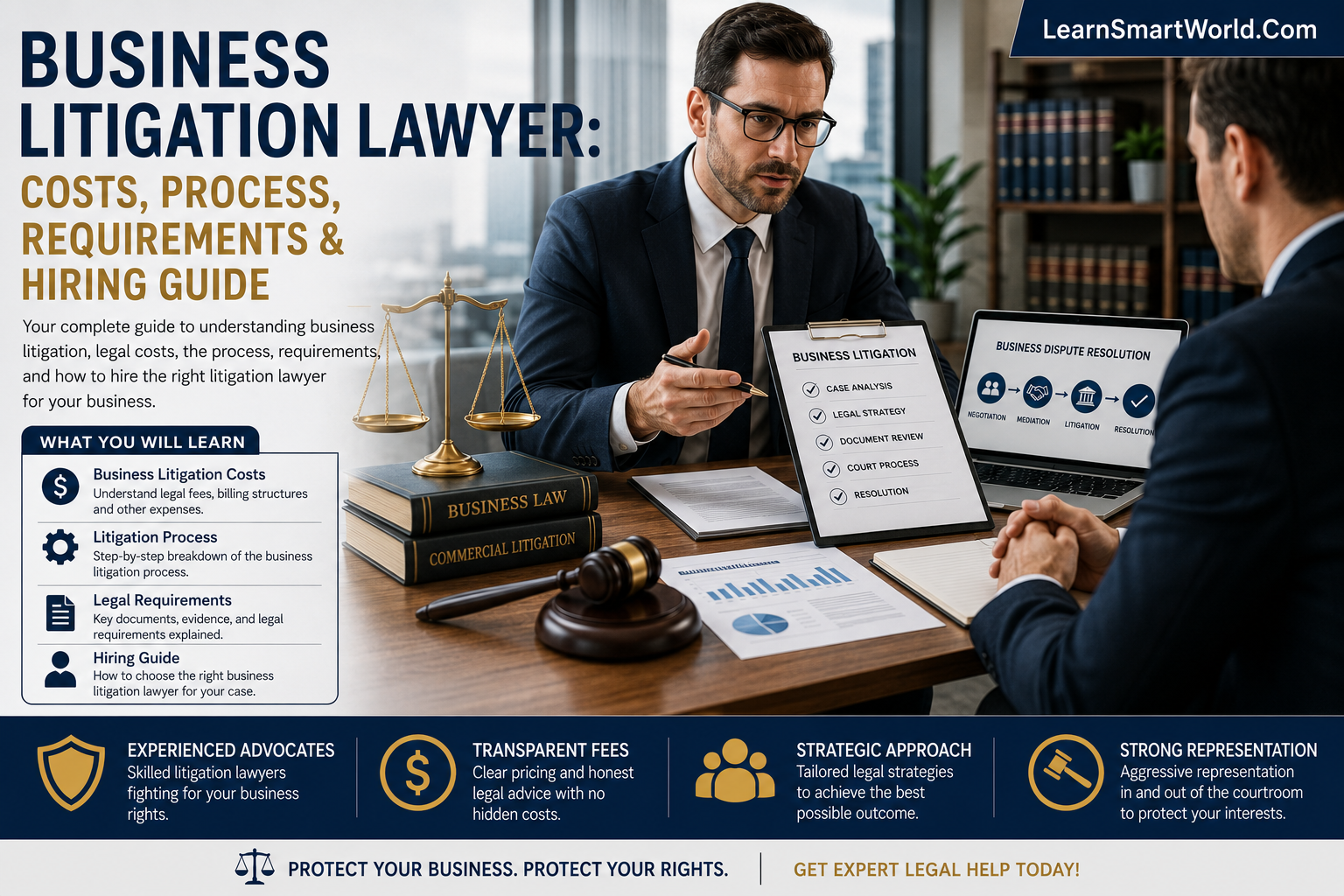
You may wish to consult a business litigation lawyer if:
- A customer, vendor, or competitor has filed a lawsuit against your business.
- You believe another party breached a contract.
- Your company is involved in a partnership or shareholder dispute.
- Your business faces allegations of fraud or misrepresentation.
- You need to recover unpaid invoices or business debts.
- A dispute threatens significant financial losses.
- You received a legal demand letter.
- Negotiations with another party have failed.
Common Types of Business Litigation Cases
| Dispute Type | Examples |
|---|---|
| Breach of Contract | Failure to perform contractual obligations |
| Partnership Disputes | Ownership disagreements or management conflicts |
| Shareholder Disputes | Minority shareholder claims and governance issues |
| Business Fraud | Fraudulent misrepresentation or deceptive practices |
| Intellectual Property Disputes | Trademark or trade secret conflicts |
| Employment-Related Disputes | Executive compensation or non-compete issues |
| Debt Collection | Commercial debt recovery claims |
What Does a Business Litigation Lawyer Do?
The responsibilities of a business litigation attorney vary depending on the nature of the dispute.
- Analyze the strengths and weaknesses of the case.
- Review contracts, agreements, and correspondence.
- Advise on legal risks and potential strategies.
- Attempt settlement negotiations.
- Draft and respond to legal pleadings.
- Conduct discovery and gather evidence.
- Represent clients in mediation, arbitration, or court.
- Protect business interests throughout the dispute.
How Much Does a Business Litigation Lawyer Cost?
Legal fees vary based on the complexity of the dispute, attorney experience, geographic location, and whether the case proceeds to trial.
| Fee Structure | How It Works | Typical Range |
|---|---|---|
| Hourly Billing | Client pays for attorney time spent on the matter. | $200 to $800+ per hour |
| Retainer Fee | Advance payment deposited into a client account. | Varies significantly |
| Flat Fee | Used for limited legal services. | Depends on service scope |
| Contingency Fee | Less common in business disputes. | Case-specific |
Always request a written engagement agreement outlining attorney fees, litigation expenses, expert witness costs, and billing practices.
Business Litigation Process: Step-by-Step
Step 1: Initial Consultation
The lawyer reviews the dispute, contracts, communications, and business objectives.
Step 2: Case Evaluation
The attorney analyzes legal claims, defenses, risks, and potential outcomes.
Step 3: Pre-Litigation Negotiations
Many disputes are addressed through demand letters, negotiations, or settlement discussions before a lawsuit is filed.
Step 4: Filing or Responding to a Lawsuit
If settlement efforts fail, a lawsuit may be filed or defended in court.
Step 5: Discovery Phase
Both parties exchange documents, answer written questions, and take depositions.
Step 6: Mediation or Arbitration
Many courts require parties to attempt alternative dispute resolution before trial.
Step 7: Trial
If no resolution is reached, the dispute may proceed to trial.
Step 8: Appeal (If Necessary)
Either party may have appellate rights depending on applicable law.
What Documents Should You Bring to a Lawyer?
Business litigation cases often depend heavily on documentation.
- Contracts and agreements.
- Business formation documents.
- Emails and written communications.
- Invoices and payment records.
- Financial statements.
- Corporate records and meeting minutes.
- Demand letters or legal notices.
- Partnership or shareholder agreements.
- Employment agreements.
- Any court documents already received.
How Long Does Business Litigation Take?
Litigation timelines vary significantly based on case complexity and court schedules.
| Case Stage | Possible Timeframe |
|---|---|
| Early Settlement | Several weeks to months |
| Standard Litigation | Several months to two years |
| Complex Commercial Litigation | One to several years |
| Appeals | Additional months or years |
Alternatives to Business Litigation
Businesses may wish to explore alternatives before pursuing formal litigation.
| Alternative | Description |
|---|---|
| Negotiation | Direct discussions between parties |
| Mediation | Neutral third party facilitates settlement discussions |
| Arbitration | Private dispute resolution process |
| Settlement Agreement | Mutually negotiated resolution |
Potential Business Damages in Commercial Litigation
Available remedies depend on applicable law and case-specific facts.
- Compensatory damages.
- Contract damages.
- Recovery of unpaid amounts.
- Specific performance in certain situations.
- Declaratory or injunctive relief.
- Attorney fees where permitted by law or contract.
No attorney can guarantee litigation success, damages, or financial recovery.
How to Choose the Right Business Litigation Lawyer
- Look for experience handling similar disputes.
- Review trial and negotiation experience.
- Discuss fee structures in detail.
- Evaluate communication practices.
- Ask about industry-specific experience.
- Understand who will manage the case.
Questions to Ask Before Hiring a Business Litigation Lawyer
- How many business disputes have you handled?
- Have you managed cases similar to mine?
- What are the estimated legal costs?
- What alternatives exist besides litigation?
- Who will work on my matter?
- How often will I receive case updates?
- What are the potential risks and costs?
Risks and Considerations
- Litigation can be expensive.
- Business disputes may disrupt operations.
- Court proceedings can be time-consuming.
- Legal outcomes are uncertain.
- Public litigation may affect business reputation.
Important Filing Deadlines
Business claims are subject to statutes of limitations and contractual deadlines. Missing applicable deadlines may affect legal rights. Businesses should seek legal advice promptly after identifying a dispute.
Educational Disclaimer
This information is for educational purposes only and should not be considered legal advice. Laws and legal procedures may vary by jurisdiction.
Frequently Asked Questions
What is business litigation?
Business litigation refers to legal disputes arising from commercial relationships, contracts, or business operations.
How much does a business litigation lawyer cost?
Many business litigators charge hourly rates, although fee arrangements vary by attorney and case type.
Can business disputes be settled without going to court?
Yes. Many disputes are resolved through negotiation, mediation, arbitration, or settlement agreements.
How long does business litigation take?
Timelines vary significantly depending on case complexity and whether the matter settles.
What documents should I bring to my consultation?
Bring contracts, communications, financial records, legal notices, and any documents related to the dispute.
Can a lawyer guarantee that my business will win?
No attorney can ethically guarantee litigation success or a specific outcome.
What if my business has already been sued?
You should review the lawsuit promptly with legal counsel because important deadlines may apply.
Is mediation mandatory?
Some courts and contracts require mediation or arbitration before trial.
Can small businesses hire a business litigation lawyer?
Yes. Businesses of all sizes may seek legal representation when disputes arise.
What happens if a contract is breached?
A lawyer can evaluate available remedies and potential legal options based on the specific agreement and applicable law.
Related Topics
- Breach of Contract Lawsuits Explained
- How Commercial Arbitration Works
- Partnership Disputes: Legal Rights and Remedies
- Immigration Lawyer
- Aviation Accident Lawyer