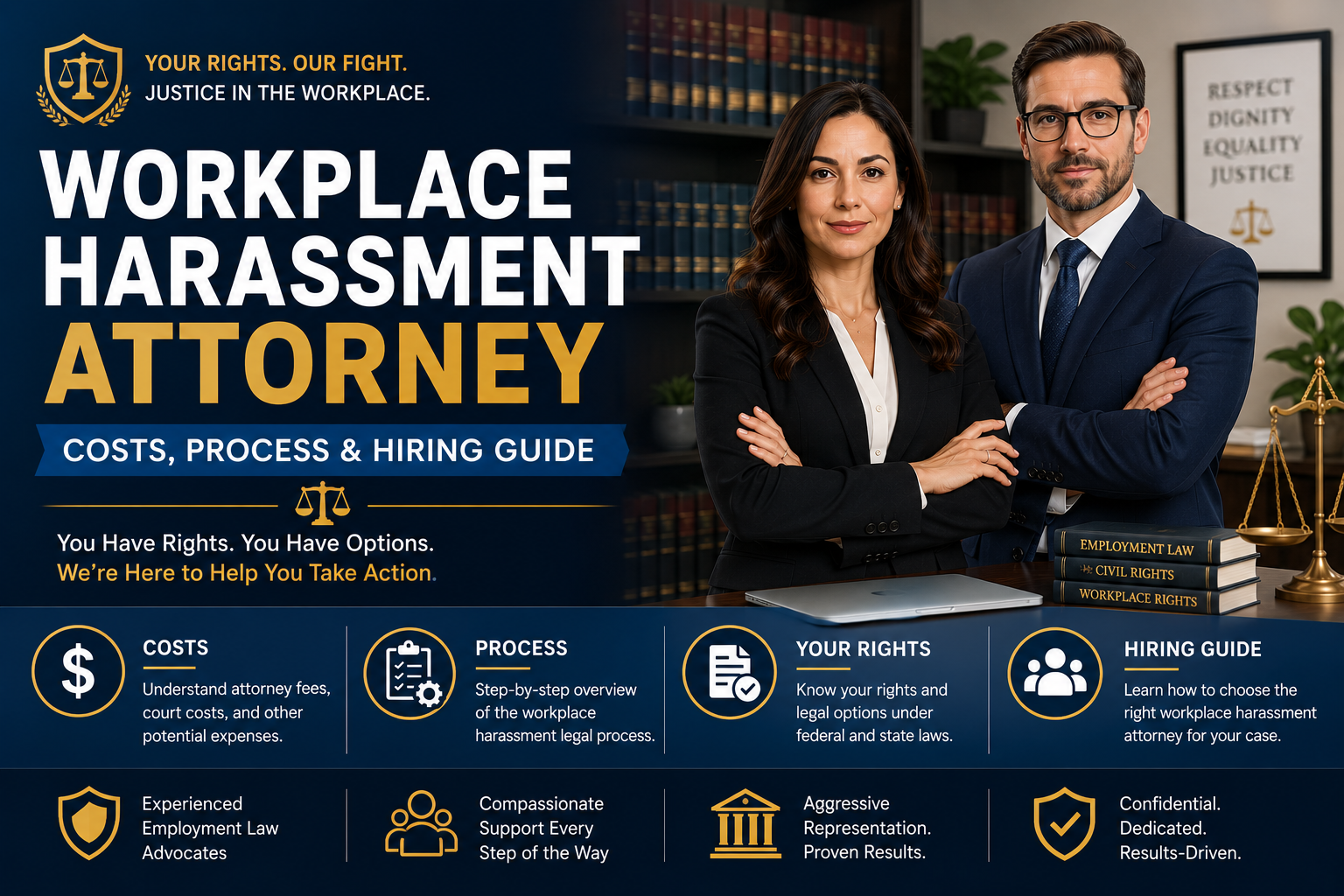
Learn about workplace harassment attorney, including his costs, the legal process for filing a claim, and key factors to consider when hiring the right lawyer for your case. Experiencing harassment at work can affect your career, finances, emotional well-being, and overall quality of life. Employees facing inappropriate conduct in the workplace often have questions about their legal rights, available remedies, reporting procedures, and whether they should hire an attorney.
Many individuals search for a workplace harassment attorney because they are experiencing ongoing workplace problems, have reported misconduct internally without resolution, or believe they have been subjected to unlawful treatment.
This guide explains when hiring a workplace harassment attorney may be appropriate, what evidence may be important, how the legal process generally works, and what costs prospective clients should expect.
What Is a Workplace Harassment Attorney?
A workplace harassment attorney is an employment lawyer who represents employees or employers in disputes involving unlawful workplace harassment. These attorneys advise clients regarding employment laws, internal complaint procedures, government agency complaints, settlement negotiations, and litigation.
Workplace harassment cases frequently involve federal, state, and local employment laws that prohibit certain forms of discrimination and retaliation.
What Is Workplace Harassment?
Workplace harassment generally refers to unwelcome conduct that creates an intimidating, hostile, or offensive work environment or affects employment decisions.
Not every unpleasant workplace interaction qualifies as unlawful harassment. Whether conduct violates employment laws depends on the facts, applicable statutes, and jurisdiction.
Common Types of Workplace Harassment
| Type of Harassment | Examples |
|---|---|
| Sexual Harassment | Unwelcome sexual advances, comments, or requests |
| Hostile Work Environment | Severe or pervasive offensive conduct affecting work conditions |
| Disability Harassment | Harassment based on a disability or medical condition |
| Race or National Origin Harassment | Offensive remarks, slurs, or discriminatory conduct |
| Religious Harassment | Harassment related to religious beliefs or practices |
| Age Harassment | Harassment targeting older employees |
| Retaliatory Harassment | Mistreatment after reporting misconduct or participating in investigations |
When Should You Hire a Workplace Harassment Attorney?
You may wish to consult an attorney if:
- You believe you are experiencing unlawful workplace harassment.
- You reported harassment internally but the conduct continues.
- You were disciplined, demoted, or terminated after making a complaint.
- Your employer retaliated against you for reporting misconduct.
- You are considering filing a complaint with a government agency.
- You received severance documents following a harassment complaint.
- Your employer has initiated an internal investigation.
- You are unsure whether workplace conduct violates employment laws.
What Does a Workplace Harassment Attorney Do?
The attorney’s role depends on the circumstances of the case.
- Evaluate potential legal claims.
- Explain employment rights and obligations.
- Review employer policies and employment agreements.
- Assist with internal complaints.
- Prepare complaints for government agencies.
- Gather and preserve evidence.
- Negotiate settlements.
- Represent clients during mediation, administrative proceedings, or litigation.
How Much Does a Workplace Harassment Attorney Cost?
Legal fees vary depending on the complexity of the matter, attorney experience, geographic location, and whether litigation becomes necessary.
| Fee Structure | How It Works | Typical Arrangement |
|---|---|---|
| Consultation Fee | Initial case evaluation. | Free to several hundred dollars |
| Hourly Billing | Attorney charges based on time spent. | $200 to $700+ per hour |
| Contingency Fee | Attorney fees may depend on case recovery. | Available in some cases |
| Retainer Agreement | Advance payment for legal services. | Varies significantly |
Before hiring an attorney, request a written fee agreement explaining legal fees, litigation expenses, filing fees, and other potential costs.
Workplace Harassment Legal Process
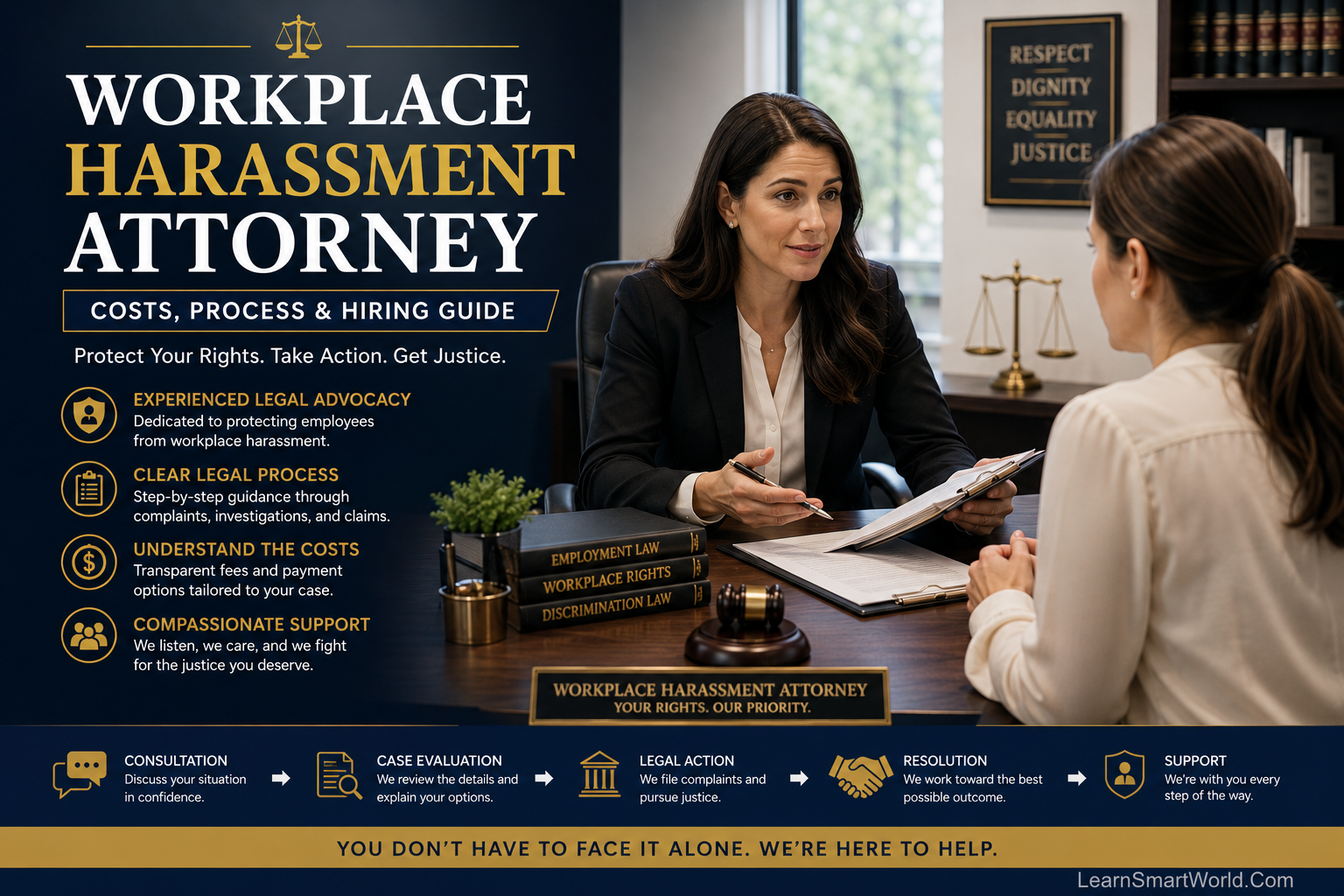
Step 1: Document the Conduct
Employees often begin by documenting incidents, dates, witnesses, and communications relating to the alleged harassment.
Step 2: Review Employer Policies
Employers frequently maintain written harassment and complaint procedures in employee handbooks or workplace policies.
Step 3: Internal Complaint
Employees may report concerns to supervisors, human resources departments, or designated personnel.
Step 4: Attorney Consultation
An attorney reviews the facts, evidence, and potential legal claims.
Step 5: Administrative Complaint
Depending on applicable law, employees may need to file a complaint with a government agency before pursuing litigation.
Step 6: Investigation or Mediation
Government agencies, employers, or both may investigate allegations. Some cases proceed through mediation.
Step 7: Settlement or Litigation
If the matter is not resolved, litigation or additional legal proceedings may occur.
What Evidence Is Important in Workplace Harassment Cases?
Evidence frequently plays a significant role in employment disputes.
- Emails and text messages.
- Written complaints.
- Performance reviews.
- Witness statements.
- Personnel records.
- Photographs or recordings, where legally permitted.
- Employment policies and handbooks.
- Notes documenting incidents and dates.
What Documents Should You Bring to an Attorney?
- Employment agreements or contracts.
- Employee handbook or workplace policies.
- Written complaints submitted to management.
- Email communications.
- Text messages or other communications.
- Performance evaluations.
- Termination or disciplinary notices.
- Severance agreements, if applicable.
- Witness information.
Can Employers Retaliate Against Employees for Reporting Harassment?
Many employment laws prohibit retaliation against employees who report unlawful workplace conduct, participate in investigations, or exercise protected legal rights.
Whether retaliation occurred depends on the facts and applicable law.
Potential Remedies in Workplace Harassment Cases
| Potential Remedy | Description |
|---|---|
| Policy Changes | Changes to workplace practices or procedures |
| Back Pay | Compensation for certain lost wages in qualifying cases |
| Reinstatement | Return to employment under certain circumstances |
| Settlement Agreements | Negotiated resolution between the parties |
| Other Legal Remedies | Remedies available under applicable law |
The remedies available depend on applicable employment laws and the specific facts of the case.
How Long Does a Workplace Harassment Case Take?
| Case Stage | Possible Timeframe |
|---|---|
| Internal Investigation | Weeks to months |
| Administrative Complaint | Several months or longer |
| Mediation | Several weeks to months |
| Litigation | Months to years |
Benefits of Hiring a Workplace Harassment Attorney
- Understanding complex employment laws.
- Protection of employee rights.
- Assistance preserving evidence.
- Professional representation during negotiations.
- Guidance regarding administrative procedures.
- Support during investigations and litigation.
Risks and Considerations
- Employment disputes can be stressful and time-consuming.
- Strict filing deadlines may apply.
- Legal proceedings may take months or years.
- Legal representation involves costs.
- Case outcomes vary based on the facts and applicable law.
How to Choose the Right Workplace Harassment Attorney
- Look for experience in employment law.
- Verify licensing and professional credentials.
- Ask about experience handling harassment cases.
- Discuss fee structures and litigation costs.
- Evaluate communication practices.
- Determine who will personally manage your case.
Questions to Ask Before Hiring a Workplace Harassment Attorney
- How much experience do you have with workplace harassment claims?
- What legal fees and expenses should I expect?
- What evidence should I preserve?
- What filing deadlines may apply?
- Who will handle my case?
- Will my case require an administrative complaint?
- How often will I receive updates?
Important Legal Considerations
Employment laws, filing requirements, and available remedies vary significantly by jurisdiction. Many workplace harassment claims are subject to strict deadlines.
No attorney can ethically guarantee settlement, compensation, or success in litigation.
Educational Disclaimer
This information is for educational purposes only and should not be considered legal advice. Laws and legal procedures may vary by jurisdiction.
Frequently Asked Questions
What does a workplace harassment attorney do?
A workplace harassment attorney helps employees and employers address legal issues involving harassment, retaliation, discrimination, and hostile work environments.
How much does a workplace harassment attorney cost?
Legal fees vary depending on the complexity of the case, fee arrangement, and whether litigation becomes necessary.
What qualifies as workplace harassment?
Whether conduct qualifies as unlawful harassment depends on the facts and applicable employment laws.
Should I report harassment to my employer first?
Many employers have internal complaint procedures. An attorney can help you evaluate available options.
Can my employer retaliate against me for reporting harassment?
Many employment laws prohibit retaliation against employees who report unlawful workplace conduct.
What evidence should I keep?
Emails, text messages, written complaints, witness information, and employment records may be important evidence.
How long do I have to file a claim?
Filing deadlines vary depending on the jurisdiction and applicable laws.
Do all workplace harassment cases go to court?
No. Some disputes are resolved through internal investigations, mediation, or settlement negotiations.
Can a lawyer guarantee compensation?
No attorney can ethically guarantee compensation or any specific legal outcome.
Do I need a lawyer before filing a complaint?
Although not always required, legal advice may help individuals understand their rights and options.
Also Read
- Criminal Defense Lawyer
- Best Family Law Attorney
- Hostile Work Environment Claims Explained
- Workplace Retaliation Laws and Employee Rights
- Sexual Harassment at Work: Legal Rights and Reporting Options