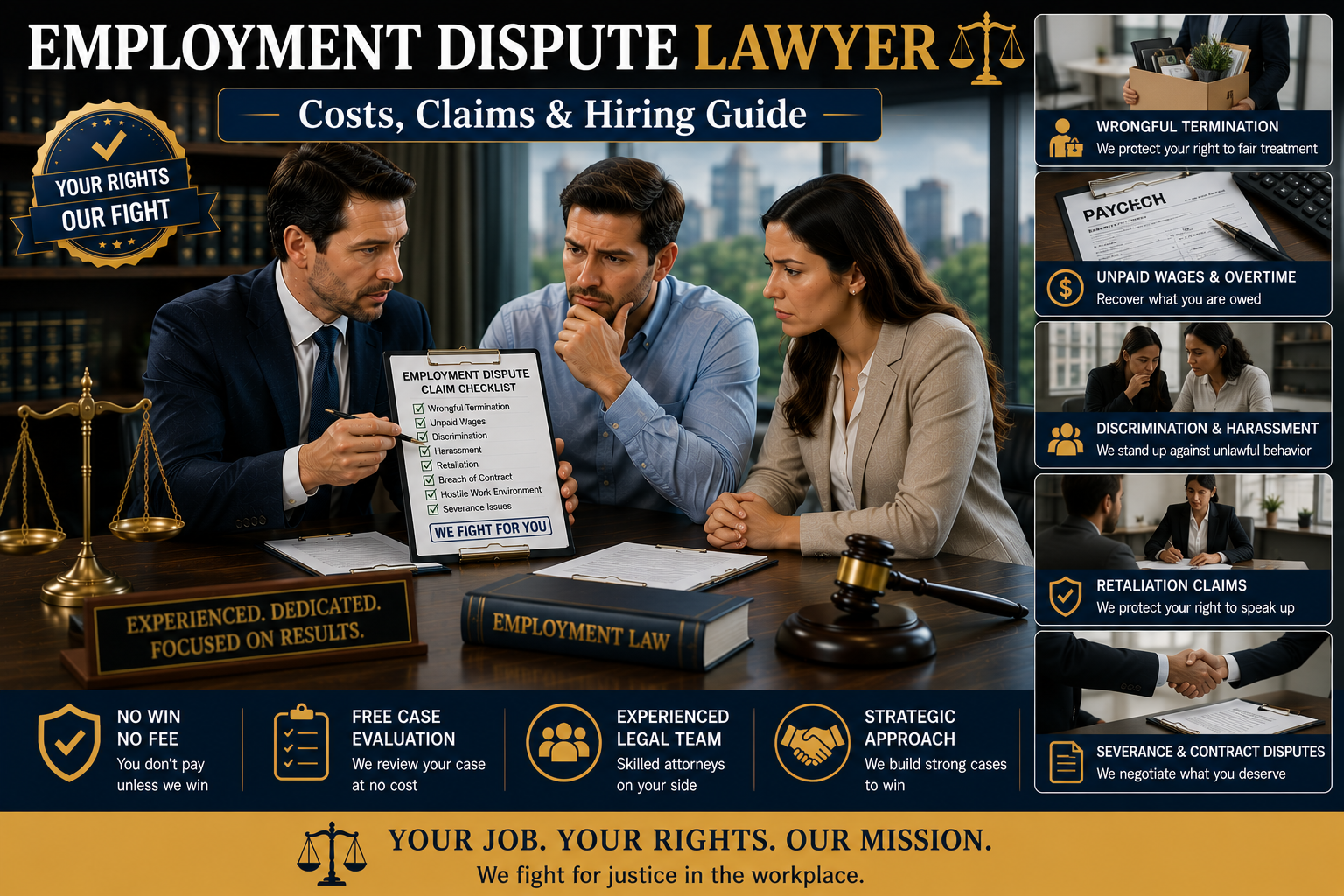
An employment dispute lawyer helps employees and employers resolve workplace conflicts involving wrongful termination, discrimination, harassment, wage disputes, employment contracts, and retaliation claims. These attorneys evaluate legal rights, negotiate settlements, represent clients before government agencies, and handle employment litigation when necessary.
Employment Dispute Lawyer: Costs, Claims & Hiring Guide
Workplace disputes can create significant financial, professional, and emotional stress for employees and employers alike. Issues such as wrongful termination, discrimination, unpaid wages, retaliation, or contract disputes may require legal guidance to understand available rights and obligations.
Many individuals search for an employment dispute lawyer because they believe their workplace rights have been violated or they are involved in a conflict with an employer, employee, or business partner. They often want to understand whether they have a legal claim, how much legal representation costs, and what steps are involved in resolving an employment dispute.
This guide explains what an employment dispute lawyer does, common workplace disputes, legal requirements, attorney fees, and the process involved in resolving employment-related conflicts.
What Is an Employment Dispute Lawyer?
An employment dispute lawyer is an attorney who represents employees, employers, executives, managers, and businesses in workplace-related legal disputes. These lawyers advise clients regarding employment rights, workplace policies, labor regulations, and dispute resolution procedures.
Employment lawyers may represent either employees or employers, depending on their practice focus.
When Should You Hire an Employment Dispute Lawyer?
Seeking legal advice may be beneficial when workplace disputes involve significant financial consequences, alleged legal violations, or unresolved conflicts.
- You believe you were wrongfully terminated.
- You experienced workplace discrimination.
- You were subjected to workplace harassment.
- Your employer retaliated against you for reporting misconduct.
- You have unpaid wage or overtime disputes.
- You disagree about the terms of an employment contract.
- You are involved in a non-compete or confidentiality dispute.
- Internal complaint procedures have not resolved the issue.
Common Employment Disputes
| Dispute Type | Examples |
|---|---|
| Wrongful Termination | Alleged unlawful dismissal from employment |
| Discrimination Claims | Alleged unequal treatment based on protected characteristics |
| Harassment Claims | Hostile work environment allegations |
| Wage and Hour Disputes | Unpaid wages, overtime, or benefits disputes |
| Employment Contract Disputes | Disagreements regarding employment agreements |
| Retaliation Claims | Adverse actions following protected activities |
| Non-Compete Disputes | Restrictive covenant enforcement issues |
| Whistleblower Claims | Disputes involving reports of misconduct |
What Does an Employment Dispute Lawyer Do?
- Review employment contracts and workplace policies.
- Evaluate potential legal claims or defenses.
- Investigate workplace allegations.
- Gather employment records and evidence.
- Communicate with employers or opposing counsel.
- Negotiate settlements and severance agreements.
- Represent clients before administrative agencies.
- File lawsuits when necessary.
- Represent clients during mediation, arbitration, and trial proceedings.
Employee vs Employer Representation
| Client Type | Common Legal Services |
|---|---|
| Employees | Wrongful termination, discrimination, harassment, wage claims |
| Employers | Policy compliance, defense of claims, contract disputes |
| Executives | Executive contracts, severance negotiations, compensation disputes |
| Businesses | Employment policies, regulatory compliance, litigation defense |
Requirements Often Needed for an Employment Claim
The legal requirements vary depending on the specific type of workplace dispute.
| Requirement | Description |
|---|---|
| Employment Relationship | An employer-employee relationship existed |
| Legal Violation | The employer allegedly violated applicable employment laws |
| Supporting Evidence | Documents or testimony support the allegations |
| Timely Filing | Claims must comply with applicable deadlines |
Important Evidence in Employment Disputes
- Employment contracts and offer letters.
- Employee handbooks and workplace policies.
- Email communications and text messages.
- Performance evaluations.
- Payroll and wage records.
- Termination notices or disciplinary documents.
- Witness statements.
- Internal complaint records.
How Much Does an Employment Dispute Lawyer Cost?
Employment lawyers may use several different fee arrangements depending on the nature of the dispute.
| Fee Structure | Description |
|---|---|
| Hourly Billing | Attorney charges for time spent on the matter |
| Contingency Fee | Common in certain employee compensation claims |
| Flat Fee | Often used for contract reviews or severance agreements |
| Retainer Agreement | Advance payment applied toward future legal services |
Clients should carefully review fee agreements and discuss anticipated litigation costs before retaining legal counsel.
Employment Dispute Resolution Process
Step 1: Identify the Workplace Issue
Determine the specific dispute and gather all relevant documents.
Step 2: Review Internal Policies
Many employers require employees to follow internal complaint or grievance procedures.
Step 3: Consult an Employment Dispute Lawyer
An attorney can evaluate legal rights, deadlines, and potential claims.
Step 4: Investigation and Evidence Collection
The lawyer reviews records, communications, and witness information.
Step 5: Negotiation or Administrative Proceedings
Some disputes are resolved through negotiation, mediation, or administrative agencies.
Step 6: Filing a Formal Claim or Lawsuit
If informal resolution efforts fail, formal legal proceedings may be initiated.
Step 7: Discovery and Litigation
The parties exchange evidence and prepare for hearings, arbitration, or trial.
Step 8: Resolution
The dispute may conclude through settlement, mediation, arbitration, or court judgment.
Potential Remedies in Employment Disputes
| Potential Remedy | Examples |
|---|---|
| Back Pay | Recovery of unpaid wages or lost earnings |
| Front Pay | Compensation for future lost earnings in certain cases |
| Benefits Recovery | Lost employment benefits or compensation |
| Reinstatement | Return to previous employment position in some cases |
| Policy Changes | Workplace policy modifications |
| Settlement Agreements | Negotiated resolutions between parties |
No attorney can ethically guarantee compensation, settlements, or successful outcomes.
Factors That May Affect Employment Claims
| Factor | Potential Impact |
|---|---|
| Quality of Evidence | Strong documentation may support claims |
| Employment Contracts | Contract terms may affect legal rights |
| Company Policies | Internal procedures may influence disputes |
| Applicable Laws | Federal, state, and local laws govern rights |
| Filing Deadlines | Missing deadlines may affect legal rights |
Benefits of Hiring an Employment Dispute Lawyer
- Professional evaluation of workplace rights and obligations.
- Experience interpreting employment laws and contracts.
- Assistance gathering and preserving evidence.
- Representation during negotiations and litigation.
- Guidance through administrative procedures.
- Strategic advice regarding dispute resolution options.
Risks and Considerations
- Employment disputes can be time-consuming.
- Litigation may involve significant costs.
- Legal outcomes depend on evidence and applicable law.
- Internal grievance procedures may apply.
- Claims are subject to strict filing deadlines.
Time Limits for Filing Employment Claims
Employment disputes often involve strict deadlines imposed by employment laws, contracts, or administrative agencies. The applicable deadline may depend on the type of claim and jurisdiction.
Because missing a deadline may affect legal rights, employees and employers frequently seek legal advice promptly after a dispute arises.
How to Choose the Right Employment Dispute Lawyer
- Look for experience handling workplace disputes similar to yours.
- Determine whether the lawyer represents employees, employers, or both.
- Understand the attorney’s fee arrangement.
- Review communication practices.
- Ask about experience with mediation and litigation.
- Discuss expected costs and timelines.
Questions to Ask Before Hiring a Lawyer
- How many employment disputes have you handled?
- Do you represent employees, employers, or both?
- What fee arrangement do you use?
- Who will personally manage my case?
- What documents should I preserve?
- What deadlines apply to my claim?
- Will mediation or arbitration be required?
Important Legal Considerations
Employment laws, contractual obligations, administrative procedures, and filing deadlines vary significantly by jurisdiction.
Early legal consultation may help preserve evidence, protect legal rights, and identify available dispute resolution options.
No attorney can ethically guarantee compensation, settlement amounts, or successful outcomes.
Educational Disclaimer
This information is for educational purposes only and should not be considered legal advice. Laws and legal procedures may vary by jurisdiction.
Frequently Asked Questions
What does an employment dispute lawyer do?
An employment dispute lawyer advises employees and employers regarding workplace conflicts and represents clients during negotiations and legal proceedings.
How much does an employment dispute lawyer cost?
Fee structures vary and may include hourly billing, flat fees, contingency fees, or retainers.
What types of workplace disputes do employment lawyers handle?
Common disputes include wrongful termination, discrimination, harassment, wage claims, and employment contract disputes.
Do all employment disputes go to court?
No. Many disputes are resolved through negotiation, mediation, arbitration, or administrative proceedings.
Can a lawyer guarantee compensation?
No attorney can ethically guarantee compensation or a specific legal outcome.
What evidence is important in employment disputes?
Employment contracts, emails, payroll records, witness statements, and workplace policies are often important evidence.
How long does an employment dispute take?
The timeline depends on the complexity of the dispute, available evidence, and the chosen resolution process.
Should I keep copies of workplace documents?
Individuals often preserve legally accessible employment records and communications relevant to the dispute.
What if my employer retaliates against me?
Retaliation protections may exist under certain employment laws, depending on the circumstances and jurisdiction.
When should I contact an employment dispute lawyer?
Many individuals seek legal advice shortly after a workplace dispute arises to protect their rights and understand available options.
Related Topics
- Workplace Harassment Attorney: Employee Rights and Claims Guide
- Construction Site Injury Lawyer
- Product Liability Lawyer
- Business Litigation Lawyer: Commercial Dispute Resolution Guide